

Nova Classical Stem Academy integrating teaching approaches
In education today, families often feel pressured to choose between two seemingly different paths: a classical education rooted in wisdom, character and clear thinking, or a STEM-focused education built around innovation, technology and problem-solving. At Nova Classical STEM Academy, we reject the idea that students must choose one or the other.
Instead, Nova is pioneering a new academic model as the first school in the world to intentionally integrate classical education with STEM (Science, Technology, Engineering, Mathematics), uniting time-tested intellectual traditions with forward-looking scientific inquiry. This Classical and STEM approach is not a trend or a hybrid compromise. It is a coherent, purpose-driven model designed to prepare students for both life and leadership in a complex, rapidly changing world.
Classical education, at its core, is about teaching students how to think, not simply what to think. At Nova, classical education follows a proven progression of learning: grammar, logic and rhetoric. In the early years, students build strong foundations in language, reading, mathematics and general knowledge. As they grow, they learn to analyze ideas, ask meaningful questions and evaluate evidence. By the time they reach the upper grades, students are expected to express their ideas clearly, persuasively and confidently–skills that remain essential regardless of career or calling.
Contrary to common misconceptions, classical education is not outdated or based on rote memorization. It is a dynamic approach that develops reasoning, communication and intellectual discipline–precisely the skills students need to succeed in advanced STEM fields.
Likewise, STEM education at Nova goes far beyond gadgets, coding exercises or isolated projects. STEM is taught as a way of thinking. Students use science, technology, engineering and mathematics to investigate real-world problems, test ideas through experimentation and apply
knowledge with purpose. Inquiry, design and iteration are woven into daily instruction, helping students understand not only how systems work, but how they can be improved.
What makes Nova truly distinctive is how these two models reinforce each other every day. Classical education strengthens reading, writing and logical reasoning. STEM education provides application, experimentation and problem-solving under real constraints. Together, they produce students who think precisely, communicate clearly and persist through challenge.
This integration is intentional across all grade levels. Younger students build habits of attention, accuracy and perseverance. Elementary students explore big ideas through literature, history and science while beginning hands-on investigations. Middle school students learn to analyze complex texts, conduct experiments and ask deeper questions. By high school, students bring everything together. They’re debating ideas, conducting research, designing solutions and making thoughtful decisions grounded in both ethics and evidence.
Character formation is also embedded in Nova’s academic model. Qualities such as responsibility, integrity and leadership are not taught as add-ons, but reinforced through daily learning, collaboration and problem-solving. Students are expected to apply their knowledge wisely and ethically, preparing them to lead not only with skill, but with purpose.
The goal of Classical STEM education is not simply academic success, though that matters. The goal is to graduate students who are prepared to think deeply, act responsibly and lead with integrity. We aim to nurture students who can navigate college, careers and life with confidence.
By uniting the enduring wisdom of classical education with the innovation of STEM, Nova Classical STEM Academy is establishing a new standard for 21st-century learning, one that honors tradition while embracing discovery.
About The Author
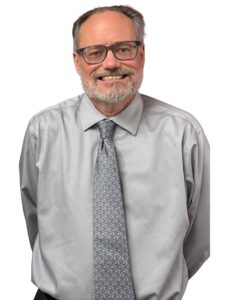
Kevin Flanagan is the director of teaching and learning at Nova Classical STEM Academy in Fort Myers. Set to open in August 2026, the school will be the first in the world to integrate the classical and STEM learning models.