

Wildlife series spotlights gopher tortoises
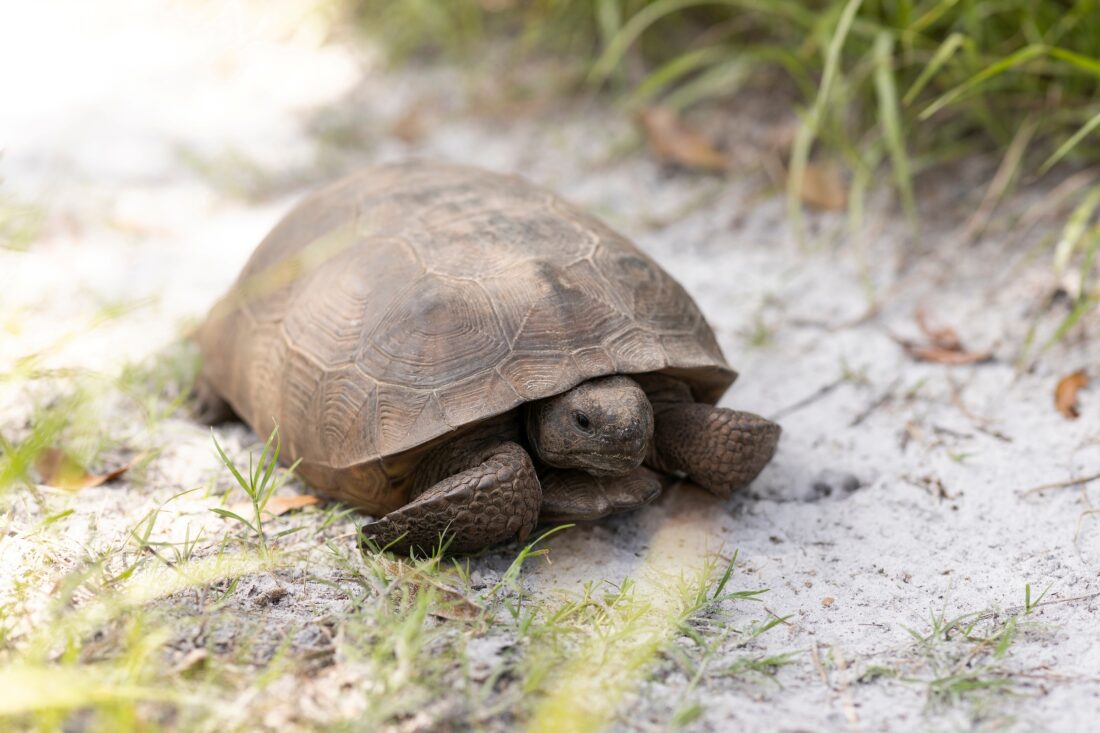

Boasting more than 80 distinct ecosystems, Florida is a biodiversity hot spot. In fact, more than
4,000 animal species are native to the Sunshine State.
As the weather continues to warm, a growing number of species are on the move, meaning more
interactions with humans. Through the University of Florida’s “Critter of the Month” series,
we’re highlighting native animals that wildlife watchers are likely to encounter and providing
bite-sized guides to their behavior.
Katie Mastenbrook is a Florida Sea Grant agent for UF’s Institute of Food and Agricultural
Sciences (UF/IFAS) Extension Pinellas County. She’s based at Weedon Island Preserve, a well-
known gopher tortoise habitat. Below, Mastenbrook provides some insight into the species,
which originated about 60 million years ago.
Q. What are gopher tortoises up to this time of year?
A. Gopher tortoises tend to be solitary animals, but during the summer, they socialize because
it’s mating season. Males can be territorial and engage in shoving matches. Females may lay eggs
or have just created a fresh nest, and eggs may hatch. Mothers typically dig their nests near the
entrance of their burrow, a spot called the apron. Otherwise, typical activity for both genders
involves foraging in the mornings and evenings, when it’s cooler, and sunbathing in the
afternoons, when it’s warmer. We’re also likely to see them burrowing or deepening burrows to
escape the heat.
Q. How would you characterize the gopher tortoise life cycle?
A. Gopher tortoise eggs will typically hatch between 80 and 100 days after being laid. Just like
marine turtles, gopher tortoise parents do not provide parental care for their nest or young, and
hatchlings fend for themselves. They don’t reach sexual maturity until they are between 10 and
25 years old, with the rate dependent on the sex of the tortoise, food availability and
environmental conditions; females typically reach sexual maturity later than males. In the wild,
gopher tortoises live between 40 and 60 years, but they are known to live significantly longer in
captivity.
Q. What do gopher tortoises eat?
A. Gopher tortoises are herbivores, and they typically eat a variety of low-growing plants,
including grasses. On Weedon Island Preserve, we’ve seen them munch on prickly pear cactuses,
sensitive briar, milk pea, silkgrass, blue-eyed grasses, groundcherries and cutleaf evening
primrose. Through their herbaceous diet, gopher tortoises play an important role as seed
dispersers, and their digging behavior helps aerate soil, improving conditions for plant seeds to
root.
Q. Gopher tortoises are well known for their burrows. What’s special about these earthen
homes?
A. Burrows are engineering marvels that can reach up to 40 feet in length and up to 10 feet in
depth. They provide a stable habitat for gopher tortoises by maintaining a more consistent
temperature and humidity year round. They offer protection from wildfires and other
environmental factors like predators. Sometimes, gopher tortoises will dig several burrows
within their territory, a foraging area that ranges in size from 1 to 4 acres.
Q. Gopher tortoises are considered a threatened species. Why is it important to protect
them?
A. Gopher tortoise burrows — in addition to providing shelter for tortoises – provide homes to
more than 350 different species. This makes the gopher tortoise a keystone species, or an
organism that supports an entire ecosystem. By protecting gopher tortoises, we are protecting
these other animals, some of which are endangered or threatened, like the Eastern indigo snake
and gopher frogs. We are also protecting the surrounding natural spaces and larger parcels of
land, parts of which can be used for recreation.
Q. What should people keep in mind when interacting with gopher tortoises?
A. Gopher tortoises are land animals and are unable to swim, so do not put them in saltwater or
freshwater. They get all the water they need through the food they eat and the rain puddles they
encounter in their habitat.
Do not disturb gopher tortoise burrows. Digging, filling or walking near burrows can harm
tortoises and other species inside. Instead, enjoy gopher tortoises from a safe distance and
observe them foraging or digging.
If walking near a gopher tortoise habitat, keep pets on a leash and close by. Dogs especially have
been known to destroy burrows or chase after tortoises when they’re off their leash.
If you suspect a tortoise is injured, contact your local wildlife agency or wildlife rehabilitation
facility. Do not move a tortoise because they typically have an established territory.
Lastly, follow wildlife signage along roadways and stay vigilant while driving near gopher
tortoise habitats.
Katie Mastenbrook is a Florida Sea Grant agent for the University of
Florida’s Institute of Food and Agricultural Sciences (UF/IFAS)
Extension Pinellas County
ABOUT
UF/IFAS The mission of the University of Florida Institute of Food and Agricultural
Sciences (UF/IFAS) is to develop knowledge relevant to agricultural, human and natural
resources and to make that knowledge available to sustain and enhance the quality of human
life. With more than a dozen research facilities, 67 county Extension offices, and award-winning
students and faculty in the UF College of Agricultural and Life Sciences, UF/IFAS brings
science-based solutions to the state’s agricultural and natural resources industries, and all
Florida residents.
Florida Sea Grant is one of 34 Sea Grant programs supported by the National Oceanic and Atmospheric
Administration (NOAA) in coastal and Great Lakes states that encourage the wise stewardship of our marine
resources through research, education, outreach, and technology transfer. The program is hosted at the University
of Florida Institute of Food and Agricultural Sciences (UF/IFAS). In addition to NOAA and UF/IFAS, the program is a
partnership between Florida universities and county governments.