

Guest Commentary: Florida’s School Choice promise means the most to the students who need it most
Families across Florida have never had more possibilities open to them in education. Neighborhood public schools, charter and magnet programs, career academies, specialized private schools, virtual courses, home education, and scholarship-funded options are all genuinely on the table.
Behind that abundance is a simple premise: parents know their children best.
Parents are empowered to choose the school, the supports, and the teachers that fit the child in front of them. For families raising a child on the autism spectrum, that shift matters enormously. Our public schools work hard for these students, and the ESE teachers, aides, and administrators across Southwest Florida do remarkable things every day with the resources they have. But no single model fits every child, and today no family has to pretend otherwise.
Florida has spent two decades building one of the boldest sets of education options in the country. The Family Empowerment Scholarship for Students with Unique Abilities directs state funds toward the tuition, therapies, and services a particular child needs, and the 2023 expansion of eligibility gave families more say than ever in where and how their children learn. Just as important, Florida’s approach has spurred innovation. When funding follows the student, educators are free to design programs around what children actually need, and models take root where none existed a decade ago.
For students receiving exceptional student education (ESE) services, choice is not abstract policy. It is often the difference between a school day spent learning and one spent simply enduring. Sensory environment, adult-to-student ratio, staff trained in applied behavior analysis, flexibility in pacing, a willingness to teach to a strength rather than drill a deficit: these are not luxuries for students on the autism spectrum. They are the preconditions for progress.
This conviction is why Family Initiative is bringing Dr. Temple Grandin to Babcock Ranch on Aug. 22 to speak with families, educators, and clinicians. Dr. Grandin is an animal scientist, a professor at Colorado State University, and one of the most consequential voices in the autism community of the last half century. Her argument is simple: education for children on the autism spectrum should begin with what those children can do.
“In special education, there’s too much emphasis placed on the deficit and not enough on the strength,” she has said.
The more useful question, in her framing, is what are you good at? Too many schools never give a child the chance to find out. Her visit will put parents, teachers, therapists, and regional leaders in one room, with a shared vocabulary for talking about students on the autism spectrum as people with aptitudes to develop, not only needs to accommodate. It is a conversation our community deserves to have close to home.
We are also proud of how the same philosophy looks in daily practice at Thrive Academy. Thrive was built for students on the autism spectrum around one idea: a customized education is the only kind worth offering. Small groups. Sensory-aware classrooms. Learning plans written to the student rather than the label. Instruction built around each child’s interests and strengths, with communication, self-advocacy, and independence treated as core academic work. The results show up in meaningful ways: a child who wants to go to school, and who is building skills that will still matter at 25.
School choice, at its best, is not a verdict on any one school. It is a recognition: children are not interchangeable, and families are the best judges of fit.
Florida has given parents tools and educators room to innovate. Our shared job is to make sure those options are excellent, and every family raising a child on the autism spectrum knows they exist.
Join us at Babcock Ranch on Aug. 22. Registration is required at fi-florida.org.
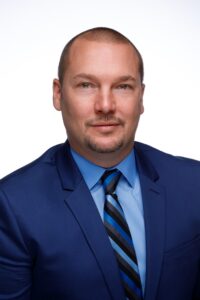
— David Brown is the president of Family Initiative.