

Sea turtle hatchlings facing challenges of washouts, disorientations
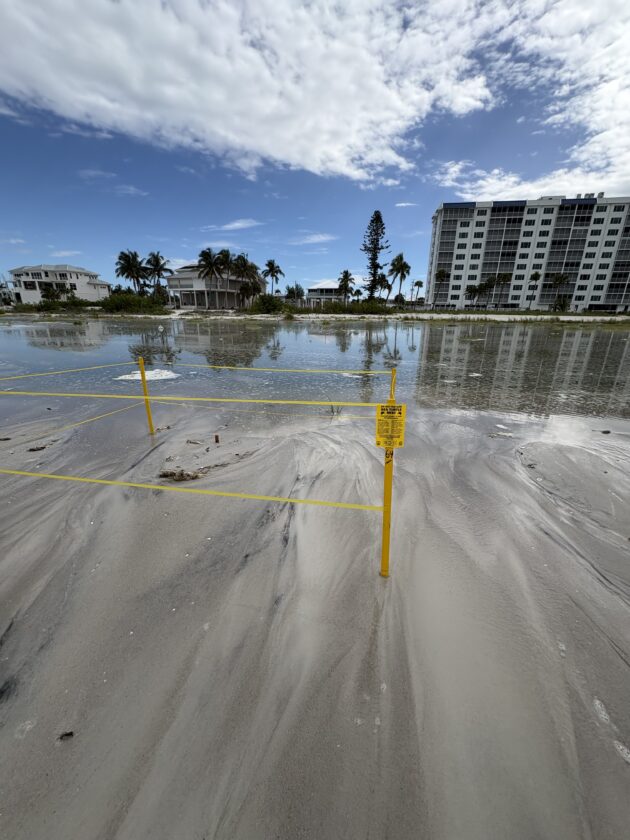
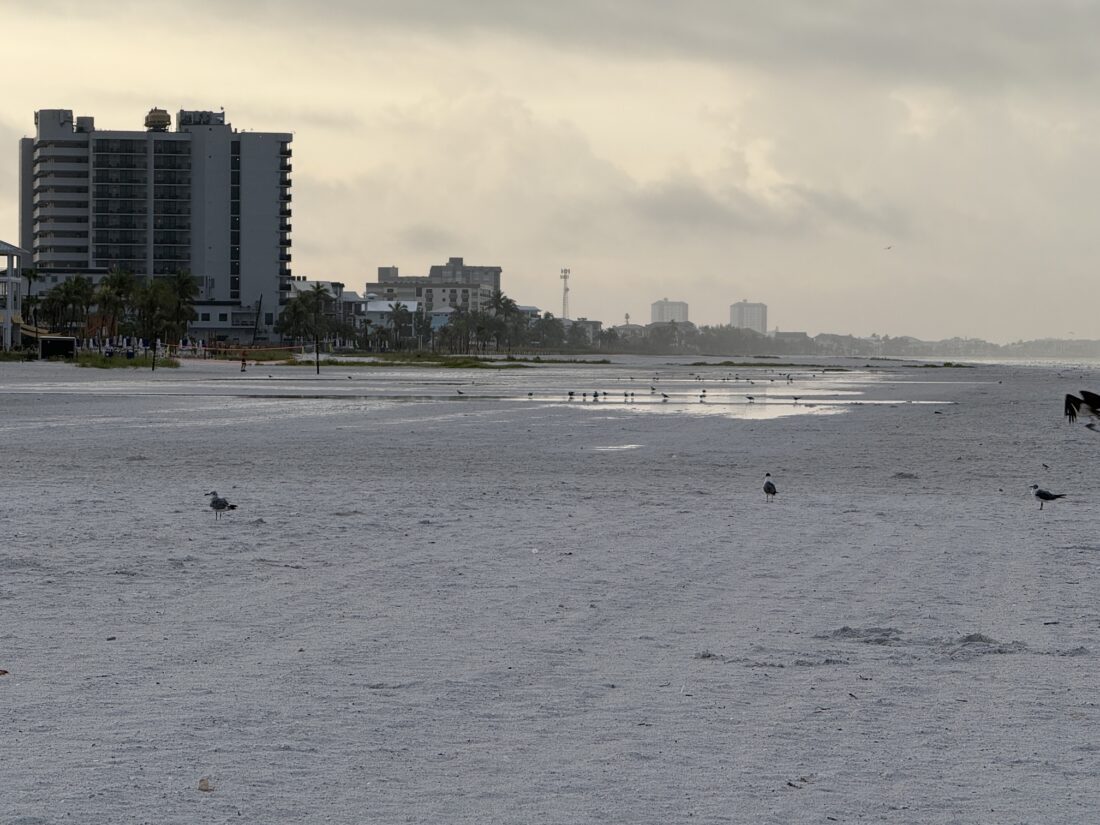
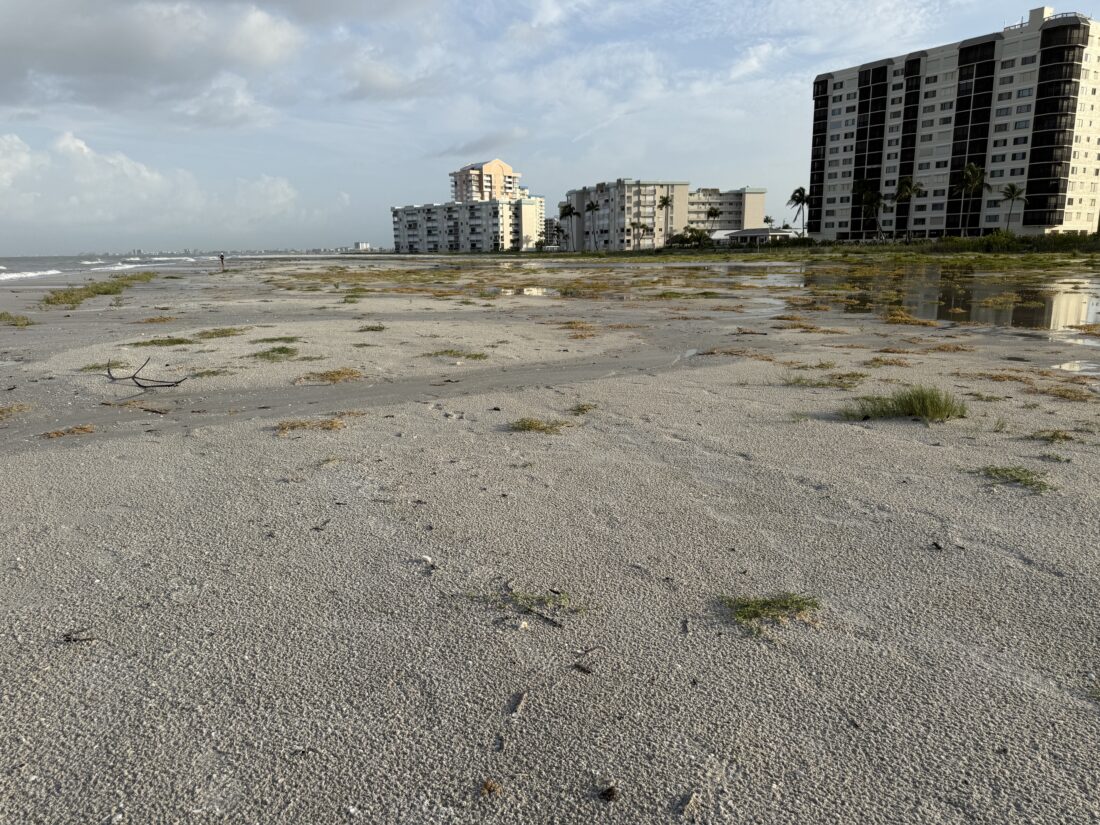
A series of storms, including the aftermath of a tropical system, led to dozens of sea turtle nests on Fort Myers Beach being put at risk. Turtle Time founder Eve Haverfield estimated that about 65% of the threatened loggerhead sea turtle nests on Fort Myers Beach (there are currently 102 nests), were washed over by the storms.
With an average of about 100 eggs per nests, that could mean thousands of eggs perished in the storms. Turtle Time won’t know for sure until they dig out the nests that haven’t hatched after the required timeframe (after 70 days). Only a few of those such nests have been dug out with grim results. Only 33 of the 102 loggerhead nests recorded on Fort Myers Beach have hatched so far.
Adding to the woes, there have been seven disorientations so far out of the 33 nests that have hatched. Last year, there were 29 nests that disoriented, with hundreds of hatchlings presumed dead by the disorientations.
The disorientations are caused by loggerhead hatchlings being disoriented by light that takes them away from the Gulf and out towards homes, condo buildings, and Estero Boulevard. If they don’t head directly into the Gulf after hatching, which is their natural instinct, they risk dying of dehydration and starvation, being eaten by predators, getting stuck in drain pipes, or getting crushed by vehicles on Estero Boulevard. The latter has already occurred unfortunately, one of the horrific scenes that Turtle Time has unfortunately encountered too often on Fort Myers Beach.
The Town of Fort Myers Beach, which used to enforce turtle lighting violations quite aggressively, has been more proactive this year after a much more passive approach in years past following Hurricane Ian and a change in administrations.
Town of Fort Myers Beach Environmental Project Manager Chadd Chustz has issued dozens of warnings to property owners in letters sent out by the town, notifying them of lighting violations.
Town officials have not responded to follow-up questions regarding the warning letters and what has been done since, and whether any further enforcement is expected. Prior to Hurricane Ian, properties with lighting violations faced fines. Since 2023, the town has not issued fines to property owners for lighting violations.
Turtle Time volunteer Cindy Johnson said the 6000 block of Estero Boulevard on the south end of the island, has been an area where there have been some disorientations lately due to lighting violations.
“We kindly request that the properties in the 6000 block of Estero Boulevard increase the surveillance of their interior lights in order to decrease the likelihood of future disorientations,” Johnson said.
Johnson said there have also been disorientations mid-island.
The Town of Fort Myers Beach turtle lighting ordinance requires prohibits outdoor lights from 9 p.m. to 7 a.m. between May 1 and Oct. 31 unless they are amber, downward-directed and shielded. All curtains and shades must be drawn to cover windows and screens during that timeframe as well.
As of June 23, Chustz said there were 27 active cases under investigation for Sea Turtle Conservation Code compliance.
Chustz and Town of Fort Myers Beach Manager Will McKannay did not respond to questions as of press time regarding the latest spate of disorientations and washouts.
Following the announcement by the town last month at dozens of warnings had been issued to property owners regarding lighting violations, Fort Myers Beach Public Information Officer Abigail Eberhart said “We’re very fortunate to have a community that is overwhelmingly supportive of sea turtle conservation efforts. Our enforcement philosophy always begins with education. In many cases, once residents or visitors understand the requirements, they quickly take the necessary steps to come into compliance. When those issues are corrected, the violation is no longer considered active. We’re encouraged that the vast majority of individuals are choosing to do the right thing after receiving that education, which ultimately benefits both our community and the sea turtles that nest on our beaches.”
Following the original publication of this story on July 29, Eberhart said “we have approximately one more week remaining in our courtesy warning period. After that, the Town will begin issuing formal violation notices. In some cases, these will be accompanied by a Notice of Violation (NOV) and Notice of Hearing (NOH), indicating that the property owner was provided an opportunity to come into compliance but failed to do so. Those cases will be scheduled for a hearing before the Special Magistrate. We believe property owners have had sufficient time during this nesting season to make the necessary corrections. At this point, it is our responsibility to enforce the Town’s ordinances and ensure we are protecting our nesting and hatching sea turtles.”
Johnson said more needs to be done about outdoor lighting that is out of compliance with the code.
“People are willing to put in the proper lighting, but they don’t always understand what they need to do.”
Johnson said she would like more education outreach by the town to let property owners how they can go about getting amber, LED, downward-directed turtle-friendly outdoor, shielded lights. The solution can be as simple as going online to the Loew’s or Home Depot websites.
“People think they can put in uplights and they can change their lights,” Johnson said. Sometimes property owners who have changed lights aren’t made aware they have done anything wrong until receiving a warning letter form the town.
Johnson said that while the town has made some posts on Facebook about turtle lighting, “most people aren’t on Facebook.”
Johnson will hand out literature to contractors on the beach from Turtle Time about the proper, turtle-friendly lighting.
While it is not uncommon for some nests to be washed over, in recent years since Hurricane Ian the washouts have become more common.
Johnson said the nests that have been most successful were the ones furthest away from the Gulf, or close to higher, elevated surfaces near the beach berm. “The beach is still equilibrating,” Johnson said.