

Nesting shorebirds need space as season draws to close
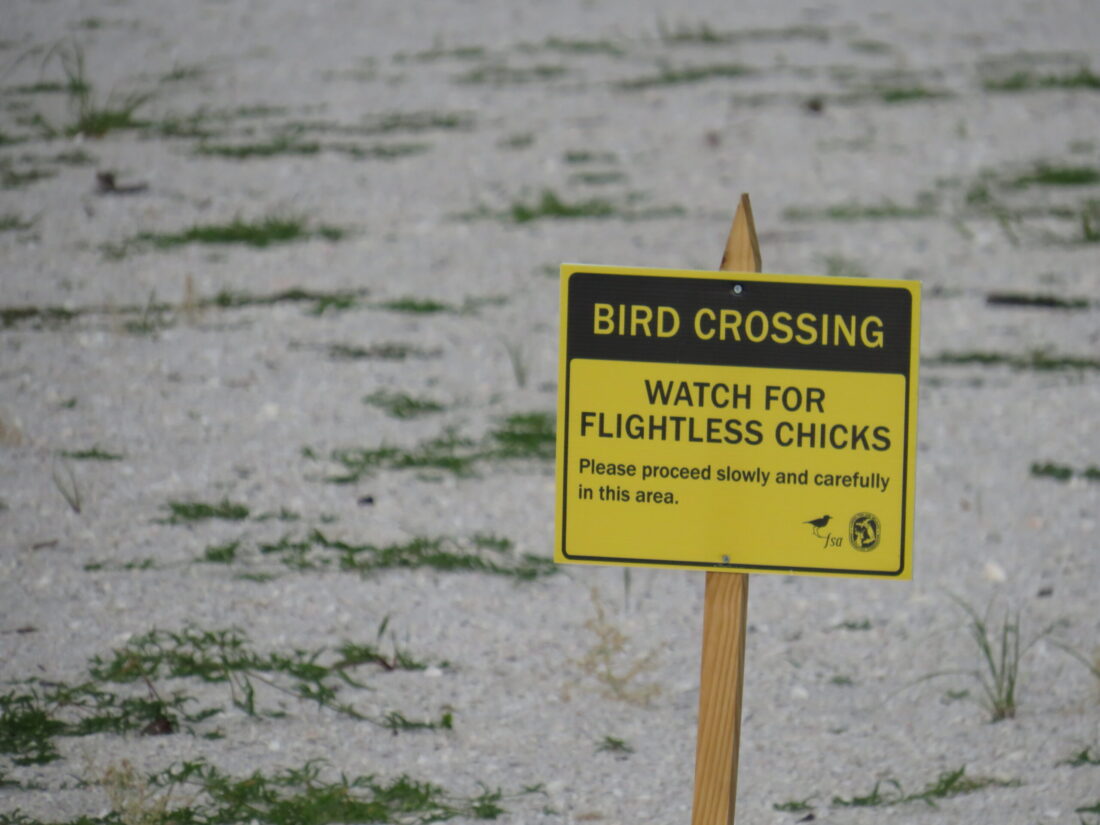
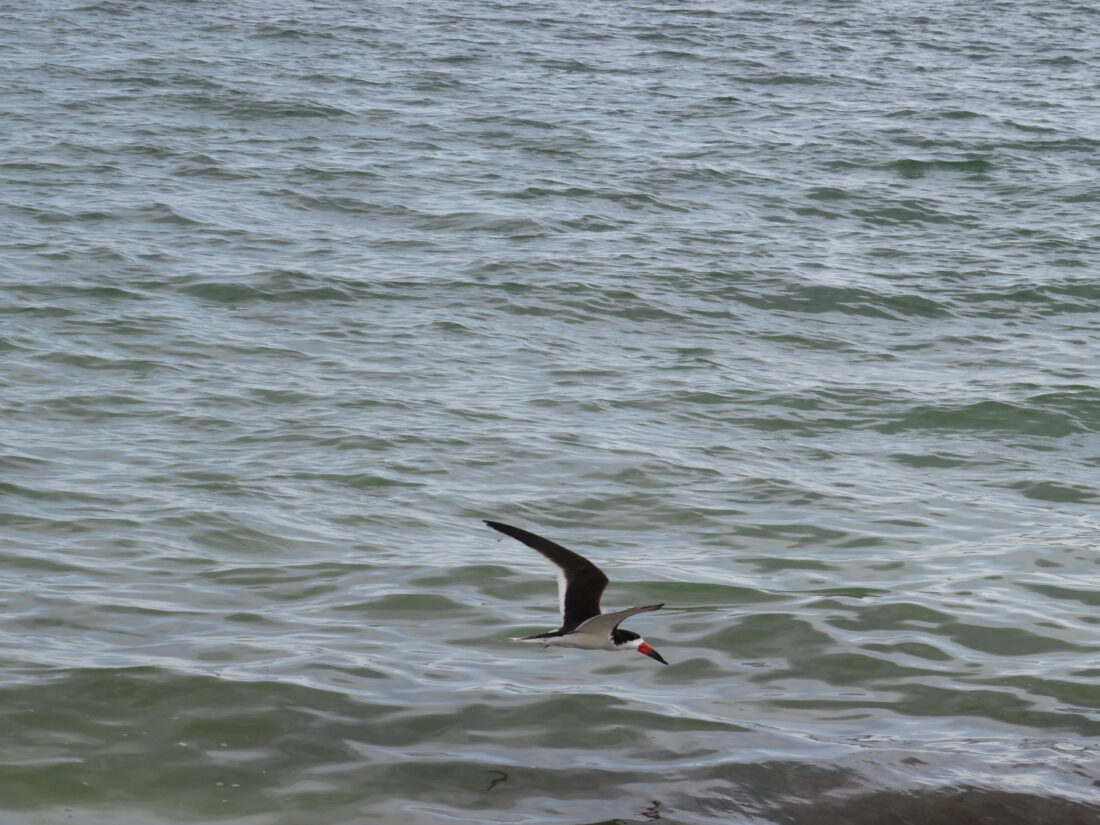
As the shorebird nesting season draws to a close in Southwest Florida, Florida Audubon is reminding the public that nesting shorebirds need their distance and to be aware of signs posted on local beaches where disturbing the nesting areas is prohibited,
Fort Myers Beach is one of the most unique environmental landscapes in all of Florida, where four of the state’s threatened shorebirds nest each year. This island is considered the only beach outside of the Panhandle, where four of the state’s threatened shorebirds nest each year. Technically, that is soon to be five shorebird species as the conservation status of Wilson’s plovers is expected to be finalized to threatened by the Florida Fish and Wildlife Conservation Commission (FWC). They are currently listed as a species of concern.
The FWC and Florida Audubon work from the start of shorebird nesting season on Feb. 15 through the end of August to monitor the nesting activity.
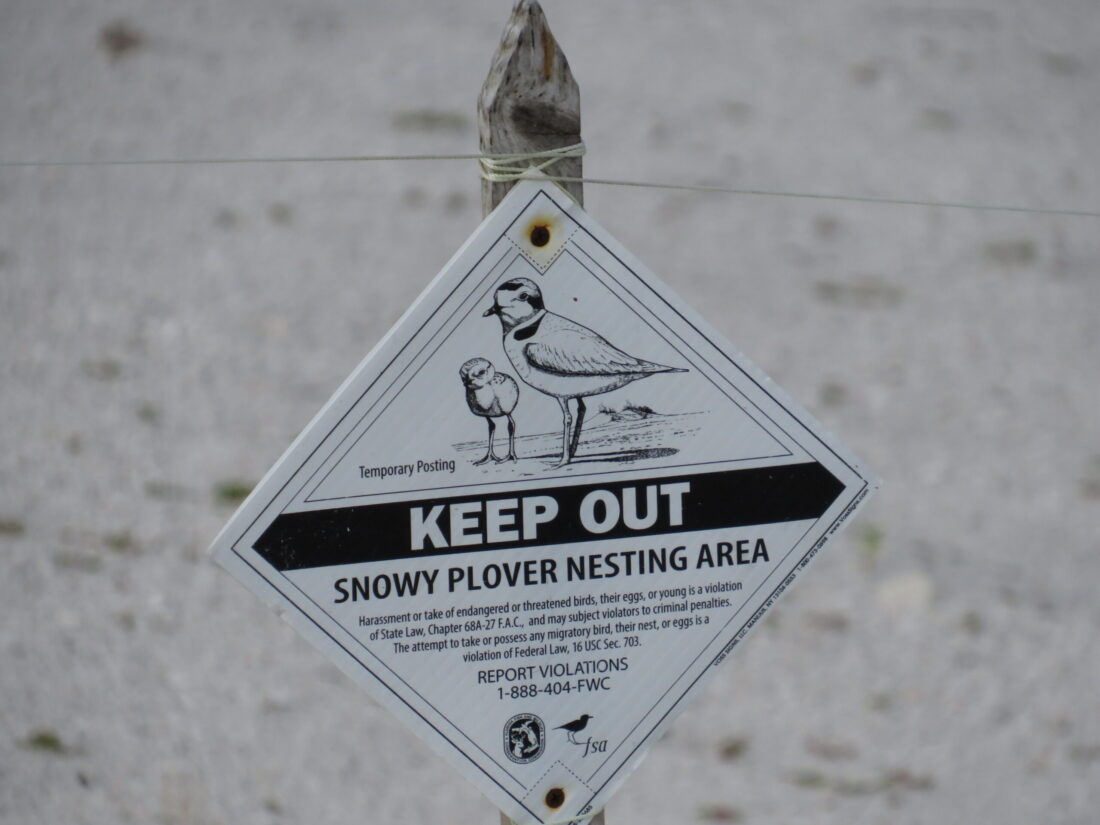
On the southern end of Fort Myers Beach, signs put up by the FWC are meant to alert beachgoers that they are approaching shorebird nesting activity and to keep a distance away from roped off areas and to be aware of shorebird baby fledglings who are taking their first steps. Shorebird nests can sometimes pop up outside of the areas and so beachgoers should be aware and stay as far away from the roped off areas as possible. Some least terns and other birds may approach in the area, as an indicator and further warning that you may be too close for comfort for the nesting shorebirds.
Approaching too closely to the signs, or the nests, could lead to birds leaving, or flushing from their nests. The abandonment of the nests, can lead to eggs not hatching or fatal consequences for hatchlings if a predators reaches them (crows, laughing gulls, or other wildlife).
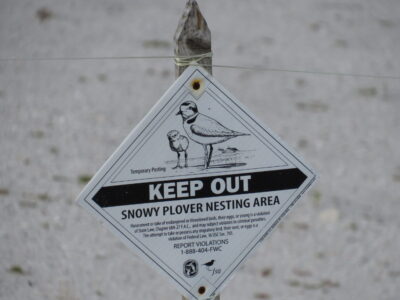
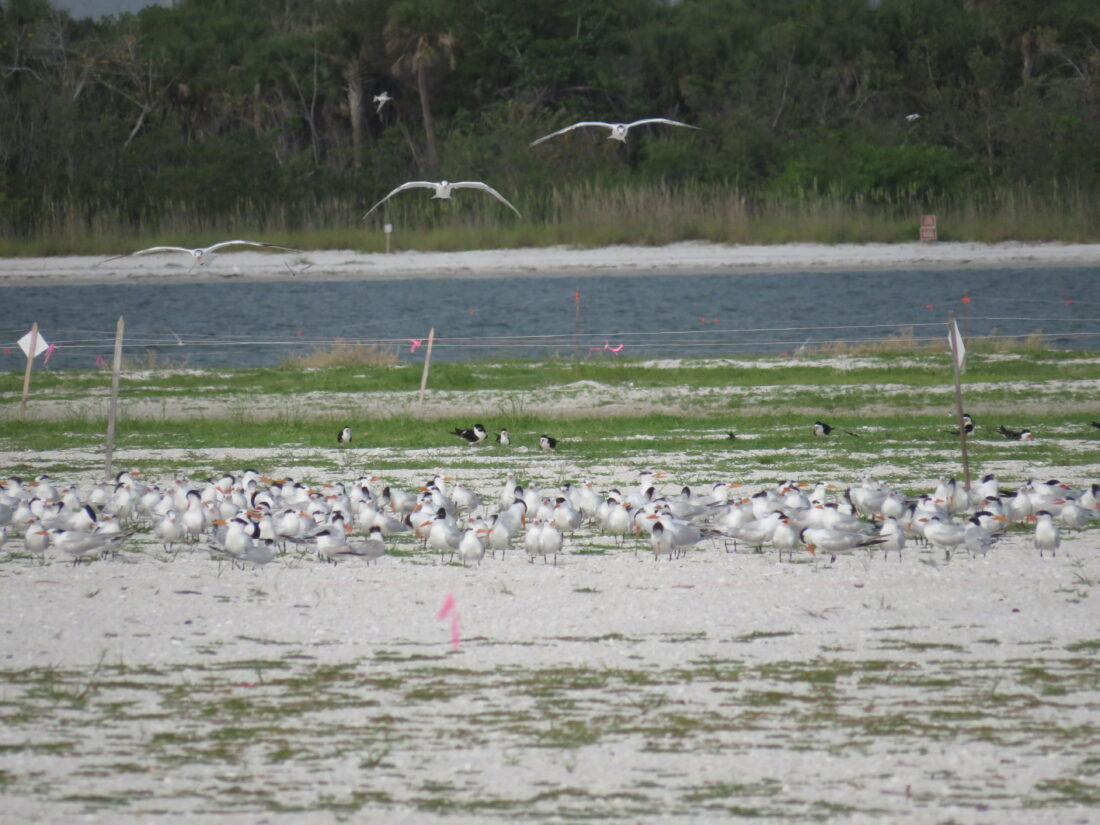
The shorebird nesting season runs through Aug. 31 on Fort Myers Beach. Beachgoers should keep their distance from any signs where there is a nesting area. Photo by Nathan Mayberg
The populations of nesting black skimmers, least terns, snowy plovers and American oystercatchers are limited to small sections of Fort Myers Beach – mostly around the Little Estero Island Critical Wildlife Area and Carlos Beach on the southernmost tip. For some of the birds, there are only a few hundred breeding pairs left in the state. The American oystercatcher has the lowest numbers of the group, and does not nest in large quantities on the island, preferring areas further up north.
Of those nesting shorebirds on Fort Myers Beach, the largest group are black skimmers and least terns who nest predominantly on the southernmost edge of the island around Mulholland Point (also known as Carlos Point Beach). Wilson’s plovers and snowy plovers nest in fewer numbers, while American oystercatchers have been less active in nesting in recent years. According to the FWC, there is one American oystercatcher nest this season on Fort Myers Beach.
According to the FWC, there are 142 black skimmer chicks and 97 least tern chicks of various ages on Fort Myers Beach currently. So far this season, there have been 12 Wilson’s plover nests and 8 snowy plover nests.
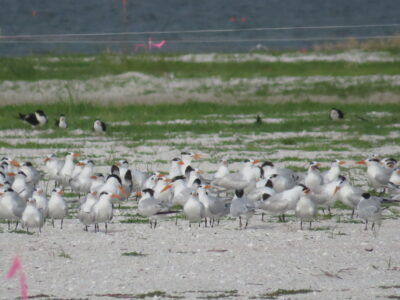
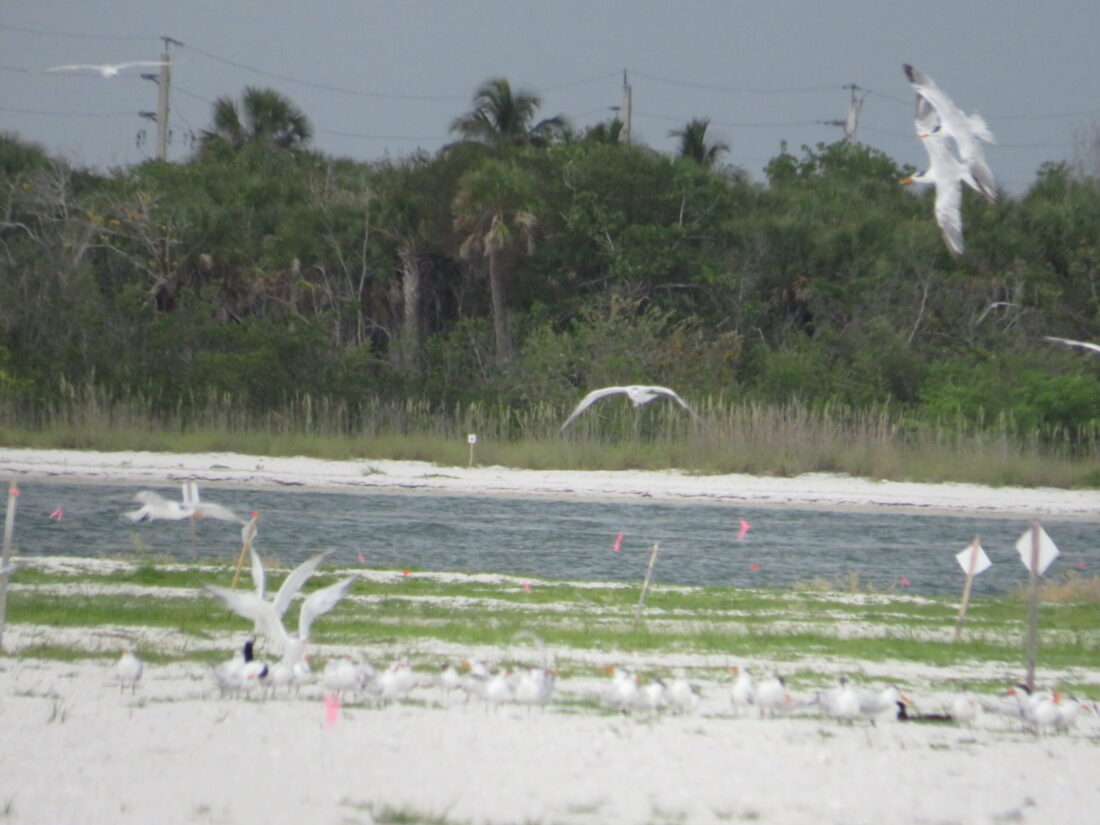
Shorebirds nesting on Fort Myers Beach. Photo by Nathan Mayberg
Fortunately for many shorebirds, their nesting season coincides with a quieter time of year on Fort Myers Beach during the summertime. Still, not everybody walking the beach understands that the signs and roped off areas are meant to keep beachgoers a safe distance from the nesting activity to avoid any disturbances.
Earlier this spring, two snowy plover nests right in the middle of the beach, mid-island, faced disturbances from not only being in close proximity to heavy beach activity around Memorial Day weekend, but also was not far from the Town of Fort Myers Beach sand haul project. While shorebird monitors were in place to ensure that the town and its contractors followed the applicable law in relation to the nesting shorebirds, there is also the more difficult task of protecting the hatchlings. Whether all of the eggs in the nests hatched and whether the hatchlings all survived, is not clear.
“People can help with nesting success by keeping 300 feet or more away from nesting shorebirds, seabirds and wading birds,” FWC spokesperson Lisa Thompson said. “Shorebirds and seabirds nest in shallow scrapes in the sand and their tiny eggs and chicks are well-camouflaged and often difficult to see. Keep out of posted areas and be on the lookout for posted nesting sites and signs designating Critical Wildlife Areas on the beach or coastal islands – these areas are closed to public access to protect wading birds and shorebirds while they nest and raise their chicks. Watch for chicks venturing outside of posted areas as they become more mobile.”
Thompson said that “if birds change your behavior when you approach or walk by, you are likely too close. You can also help waterbirds at any time of the year by continuing to give them space and walking around individual or flocks of birds on the sand – at other times of the year, migratory shorebirds and seabirds may be taking a much-needed break on the sand after having flown for thousands of miles.”
There has been some concern that some of the signs and roped-off areas the FWC put out this year for shorebirds, such as the snowy plovers mid-island, did not give them enough room from all of the activity aroynd them.
Thompson said “in some instances where the signs may be closer to nesting birds, reasonable pedestrian access is maintained in situations where breeding beach-nesting birds will tolerate recreational pedestrian activities. Additionally, as the chicks become more mobile, they may venture outside of the posted area and near the shoreline. There are educational signs on the beach to assist in making the beachgoers aware of the birds and to help avoid causing negative impacts or take.”
Thompson said FWC staff “are not aware of any recurring issues in this location beyond occasional flushing or response to aerial predators” this season.
Thompson said the Town of Fort Myers Beach sand haul project, which was conducted not far from the snowy plover activity, “was in compliance with the Joint Coastal Permit shorebird conditions. There were no reported observations of impacts to shorebird nesting.”
Florida Audubon SWFL Shorebird Project Manager Megan Hatten said she believes the town was in compliance with the terms of the permits that have been given by the Florida Department of Environmental Protection the last couple of shorebird nesting seasons to conduct the sand haul projects in the middle of the nesting seasons, though it wasn’t ideal for the birds.
“It is definitely not the timing we like and we would like to avoid it but they followed all the permits they were required to and all the regulations that are currently in place,” Hatten said. The Florida Department of Environmental Protection has approved the permits, while the town has hired shorebird nesting monitors and the FWC has also been tasked with keeping an eye on the project while also monitoring the nesting activity on the southern end of the beach. The town’s contractors were required to stay 300 feet away from the nests and the fledging birds, though there was concern this spring about how close the activity was to the snowy plover nests by some.
“We always recommend that these projects don’t take place during nesting season but they are following the regulations,” Hatten said.
Hatten is positive overall by the number of nests this season. “It looks like it is going to be a good year,”
Hatten said. “All of our plovers seem to be done with their active nesting but there are still a few broods of chicks out in a few areas so things are going well overall.”
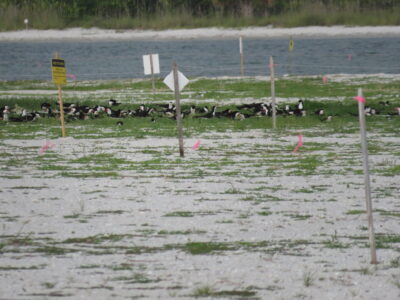
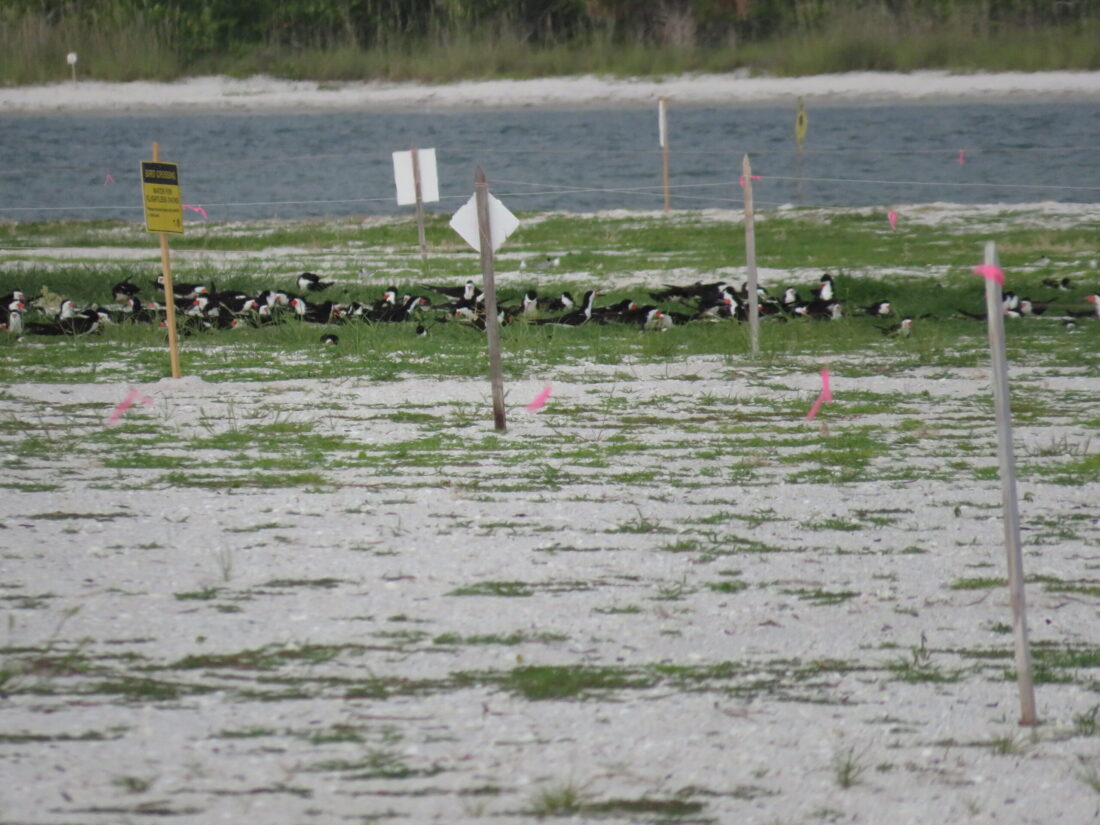
Black skimmers nesting on Fort Myers Beach
Hatten said the population of black skimmers is down on Fort Myers Beach this year, but some are now on the the Sanibel Causeway for the first time in decades. The black skimmer colony in Collier County at Second Chance Critical Wildlife Area has doubled this year, she said.
Black skimmers and least terns nest close together on Carlos Point Beach. They are both colonial groups who enjoy the wide open beach, which is one reason they are attracted to Fort Myers Beach, Hatten said. They have the same nesting strategy of nesting in groups.
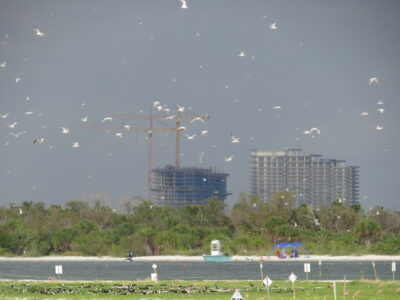
Least terns like more shells in their area, while black skimmers like more of the sandy area. A lot of vegetation was covered during the sand haul projects, which Hatten said can be an issue for snowy plovers and American oystercatchers who feed on bugs attracted to the vegetation. The least terns and black skimmers aren’t as reliant on vegetation. The vegetation at Carlos Beach used to create other issues, such as sand spurs, which could injure hatchlings.
Florida Audubon and the FWC have documented 12 snowy plovers on the beach this year, a mix of adults and chicks.
The Florida Audubon stewards Carlos Beach on the southern edge of Little Estero Island Critical Wildlife Area. FWC stewards rest of beach.
In regards to sign locations, Hatten said that is a call made by the FWC, and can also be a compromise with the owners of condo buildings in the area for where the roped off areas are.
Hatten urges the public to be aware of the signs. “We don’t put them out just for fun, we put them out because this is an important area,” Hatten said. You may run into a Florida Audubon or FWC monitor looking to protect the nesting areas and educate the public.
“I think it’s really important whenever people go out to the beach to be cognizant about what’s around them,” Hatten said. “Be aware of the birds around them, that is really the biggest first step. We know a lot of people are just going out to the beach to enjoy themselves and we want them to but these beaches are also important environments to these birds and their nurseries and they are trying to raise their chicks so every little action is helpful.”