

Rescue effort of cormorant on Fort Myers Beach unsuccessful
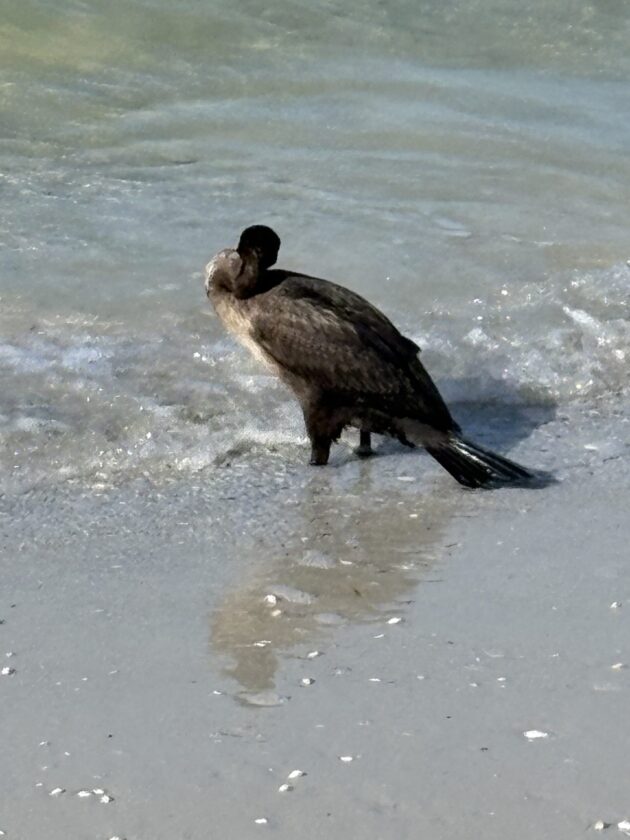
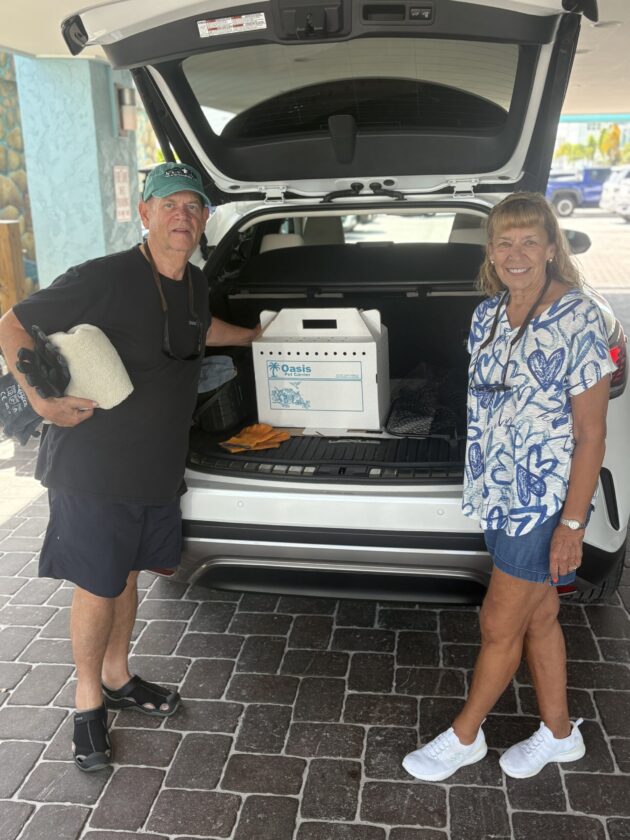
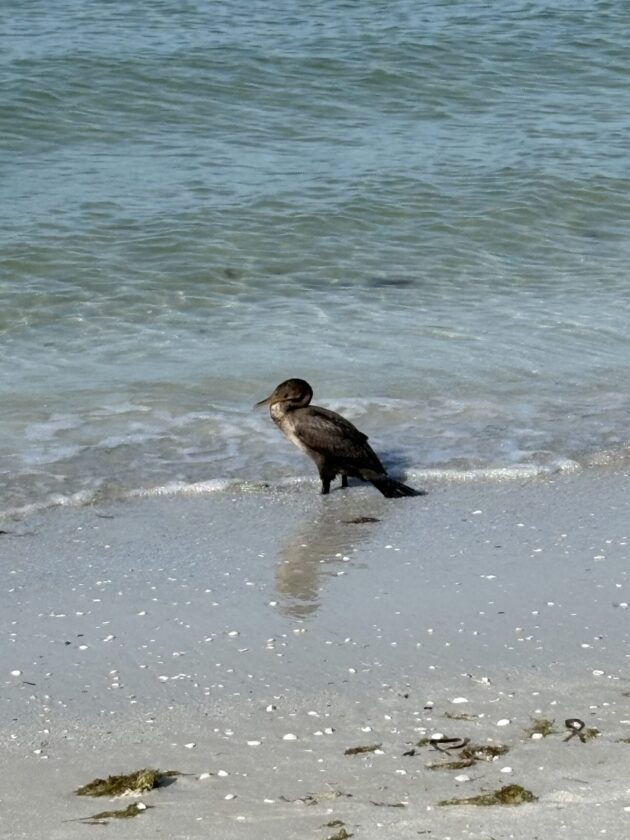
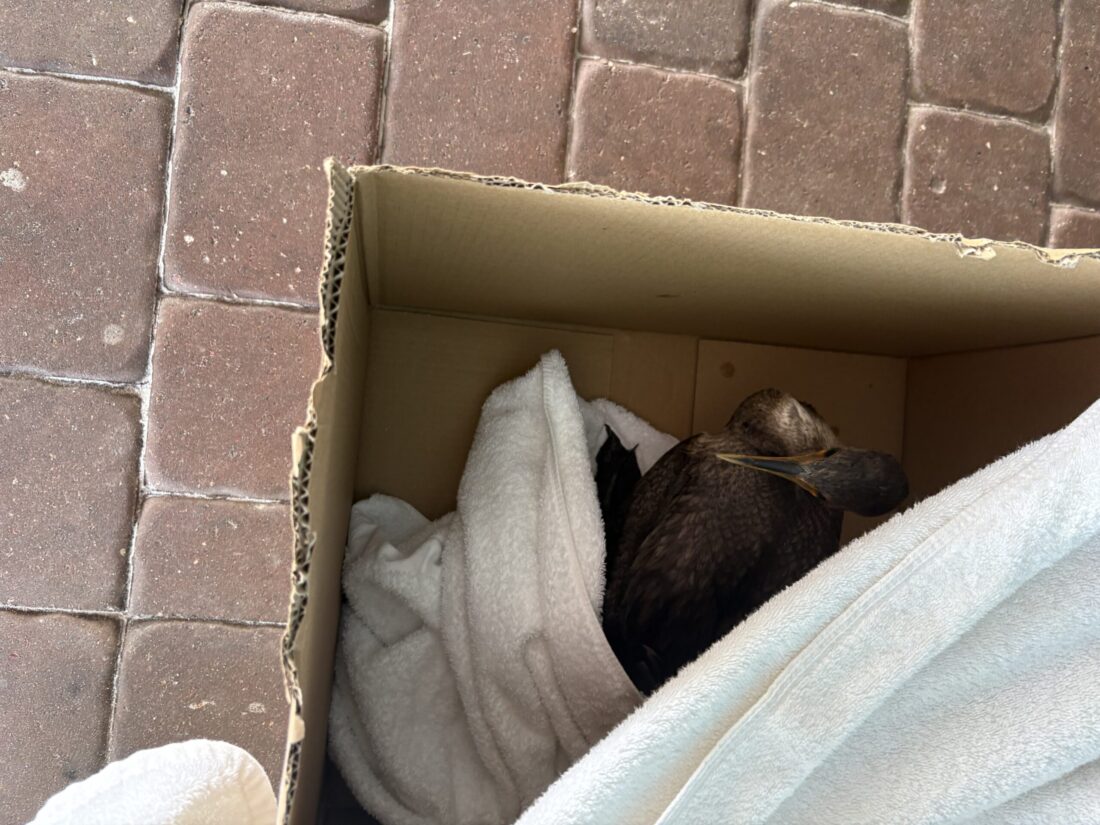
A tragic effort to rescue a young double-crested cormorant, who was found on Fort Myers Beach visibly ill, did not turn out successfully.
According to observers, the juvenile cormorant had been seen for hours standing on the water’s edge of the shoreline on Fort Myers Beach on the morning of June 28. The young cormorant was standing still with almost no movement despite passersby walking close to the bird, a sign that the bird could potentially be in distress.
After calls were made to the Florida Fish and Wildlife Conservation Commission (FWC) hotline and to the Clinic for the Rehabilitation of Wildlife (CROW) in Sanibel, CROW volunteers were dispatched to pick up the bird to bring it to the CROW hospital.
Fort Myers Beach residents John Wesley Nash and Kathy Nash picked up the cormorant and brought it to the CROW hospital, where it died shortly after, despite lifesaving measures taken by staff there.
According to Meredith Darnell, communications manager for CROW, the cormorant was found to be thin, weak and underweight. The cormorant’s age was estimated at younger than 12 months.
Darnell said CROW staff provided fluids and initial support, before it died on its own shortly after admission.
“Upon admission, the veterinary team performed a physical examination, administered supportive fluid therapy to treat dehydration, and collected blood and fecal samples for further diagnostics to help identify an underlying cause for the bird’s condition,” Darnell said.
Darnell said the juvenile double-crested cormorant was significantly underweight, with a body condition score of 1.5 out of 5, indicating it had very little muscle and fat reserves. Combined with mild dehydration and weakness, this suggested the bird had likely been struggling for some time
The cormorant weighed 840 grams. A healthy fledgling is about 1000-1500 grams, Darnell said.
“The bird’s weight loss and poor muscle condition indicate it had likely been struggling for some time before it was found,” Darnell said. “In juvenile cormorants, this can be caused by an underlying illness, difficulty catching enough fish while learning to hunt, parasite burdens, or other systemic diseases that prevent the bird from maintaining a healthy body condition. Without a definitive diagnosis, it’s not possible to determine the exact cause.
CROW staff believes the cormorant was fighting an illness. “This is not uncommon in juvenile seabirds, who often struggle to thrive and are more likely to eat scraps while they learn to hunt. It’s likely that the bird had been sick for a while, causing the weight loss and overall poor condition,” Darnell said.
Darnell said that CROW staff did not suspect that the illness was related to red tide poisoning, though the bird was not tested for red tide poisoning. “Veterinary staff elected not to pursue further diagnostics, as they were not deemed necessary at this time,” Darnell said. “There is no current indicator at this time of a widespread brevotoxicosis (or red tide) bloom.”
The FWC has not reported red tide in the area in recent weeks though CROW did receive a ruddy turnstone that had red tide poisoning on June 26.
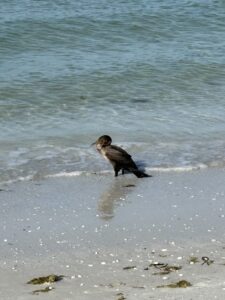
This juvenile double-crested cormorant was found on Fort Myers Beach not moving on the shoreline, where it had been standing for hours in apparent distress. Upon being transported to the Clinic for Rehabilitation of Wildlife in Sanibel, it died after being given fluids and undergoing tests. Photo by Nathan Mayberg
“We are not currently seeing evidence of a suspected widespread brevotoxicosis event or similar related toxicosis in the wildlife admitted to CROW,” says Becca Brooks, CROW Hospital Practice Manager. “Typically, Double-crested Cormorants are among the first species we see affected during a significant suspected brevotoxicosis bloom since they are diving birds that feed on the contaminated fish. During those outbreaks, it’s not unusual for us to admit three or more double-crested cormorants daily, but at this time we currently do not have any in CROW’s care. In Southwest Florida, though, we always have to remain vigilant and monitor each patient for signs that could be associated with harmful algal blooms.”
On the same day that the cormorant died, another dead bird was picked up on the beach, Fort Myers Beach Manager Will McKannay said. No further information or details regarding that bird’s death were available.
A few days later, on July 1, CROW received a deceased fish crow fledgling from Fort Myers Beach that fell out of its nest.
A total of 418 birds were admitted to CROW in June and 62 arrived already deceased. Some birds were ill; however, the majority either had trauma or were orphaned or unnecessarily taken from their habitat, Darnell said.
There were 11 bird patients on Fort Myers Beach in June. Some were injured, having either fallen from a nest or become stranded, or had their nest destroyed, or had an illness.
“Wildlife rehabilitation is a community effort,” Brooks said. “We’ve already treated more than 3,100 patients this year, and every one of those wild animals has benefited from the commitment of our staff, veterinary team, interns, volunteers, and the community members who cared enough to bring them to us.”
Kathy Nash said she had stayed with the cormorant for a short while after dropping it off at the hospital. “They thought a little bit of dehydration, but then they put it down to walk and it really didn’t want to walk anywhere. We were hoping it was going to do OK,” Nash said. “The wings were in good shape. The veterinarian said she thought there was some mild dehydration, but apparently there was more wrong with it. They put it down to walk and it didn’t walk.”
Nash said in the last couple of months, they have responded to a cormorant, pelican and ruddy turnstone, which they transported to CROW.
Nash said it’s tough seeing the injured birds though it can be rewarding when a bird is saved.
Nash said a lot of calls that CROW receives this time of year are for fledglings that people bring in by mistake thinking they are abandoned.
“They get a lot of baby birds brought to them, and a lot of times that’s because people don’t realize that just because the mom isn’t there, the bird is not abandoned,” Nash said.
Nash said sometimes birds can sit in a yard for more than 24 hours. “Sometimes birds just sit for a long time,” Nash said.
If you see a bird or other wildlife you believe may potentially be in distress, contact the FWC Wildlife Alert Hotline at 1-888-404-3922.