

Fort Myers Beach announces another fish kill event
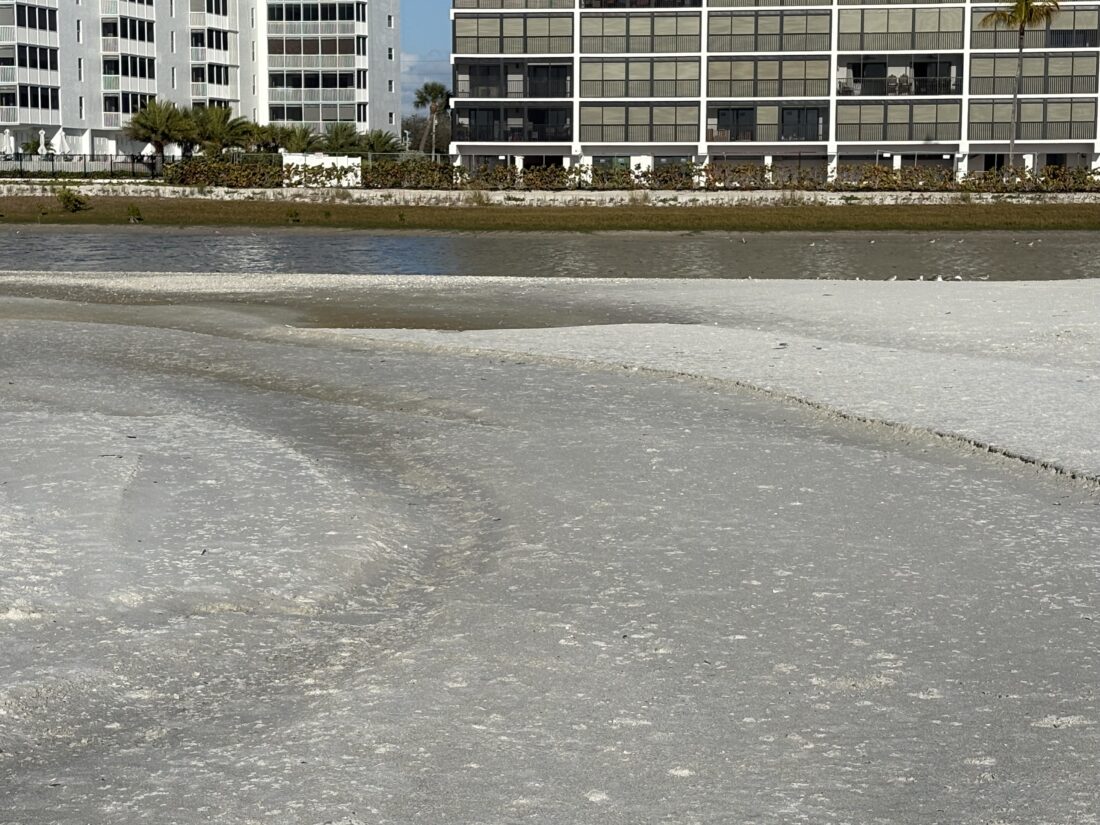
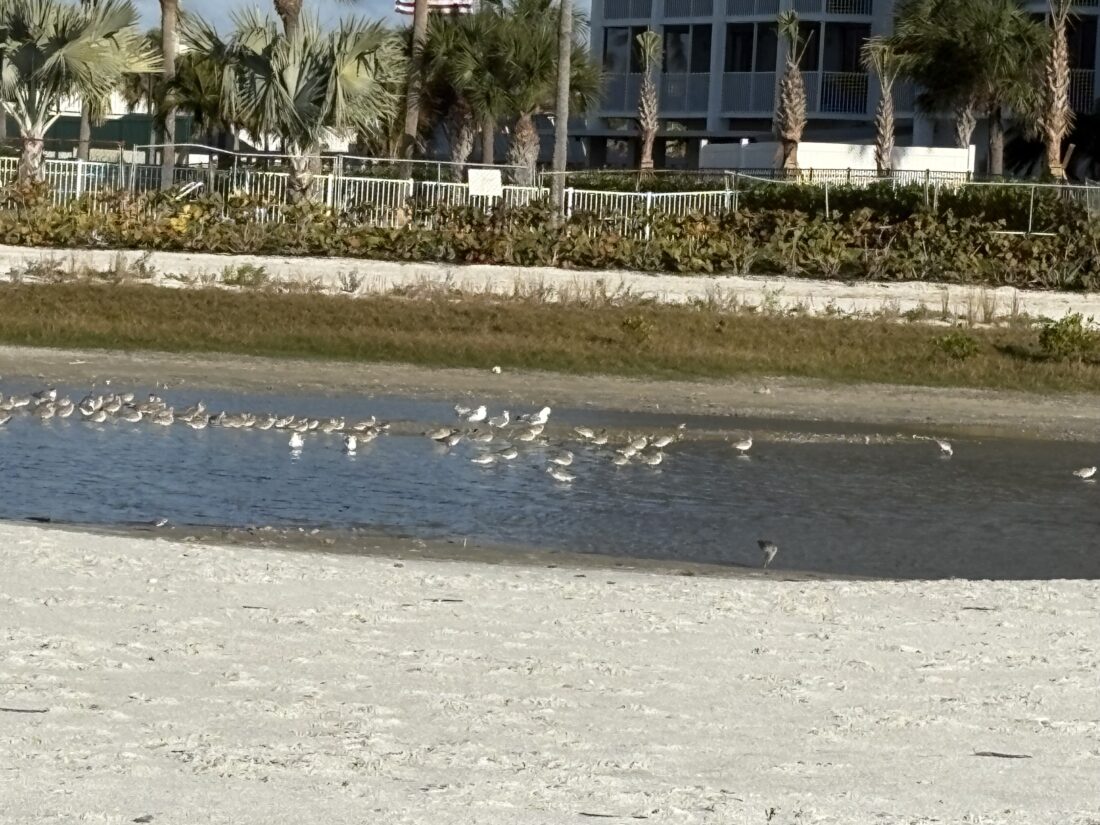
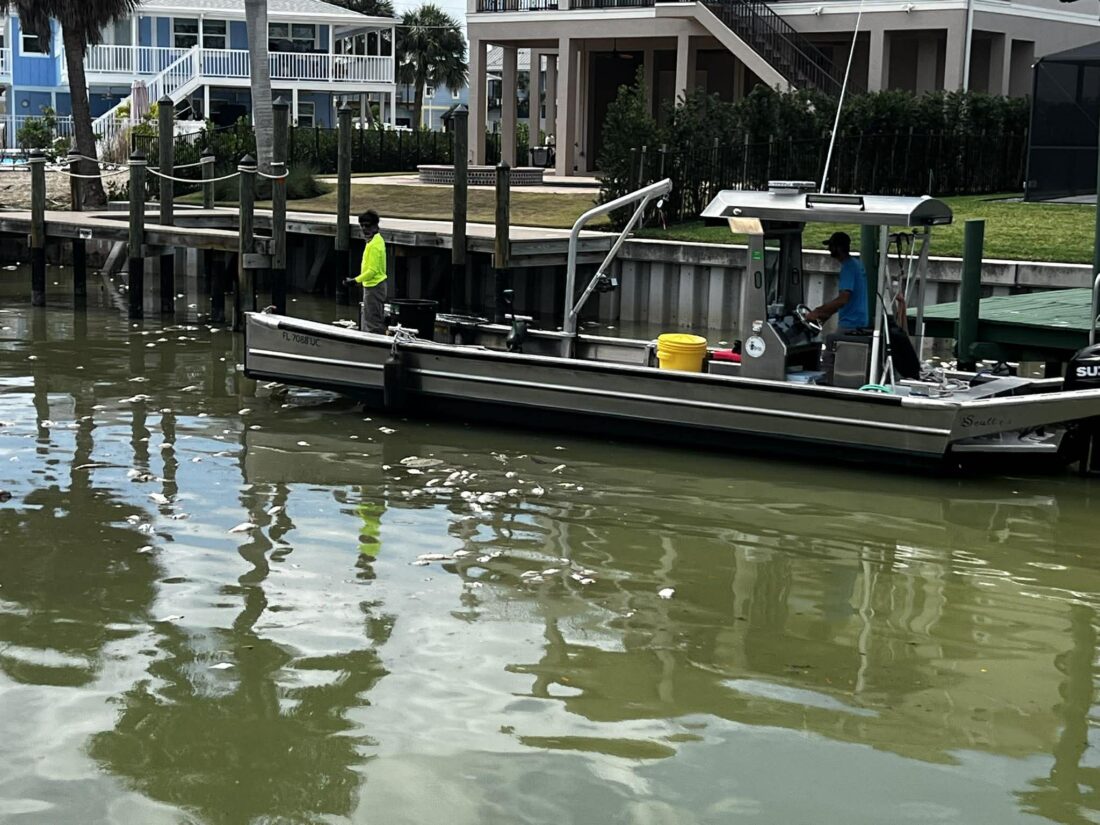
Just weeks after scores of dead fish were pulled out of Buccaneer Lagoon on the bay side of the south end of Fort Myers Beach, approximately a dozen dead fish were reported in a beach lagoon this past week in the 7000 block of Estero Boulevard that between 70 and 80 fish, including mainly redfish and mullet, Fort Myers Beach Environmental Project Manager Chadd Chustz told the Fort Myers Beach Marine and Environmental Resources Task Force at their most recent meeting.
“It’s shallow, it’s not tidally connected currently. It’s stagnant water, it’s not flowing,” Chustz said. “It is noticeably low. You can see how much the shoreline has retreated which is probably due to the drought conditions we have been having. We took samples.”
Chustz said Florida Gulf Coast University took samples of the water, which was shipped to the Florida Fish and Wildlife Conservation Commission (FWC). Chustz said the latest water test result could be indicative of an algal bloom, due to the high chlorophyll recorded.
According to Chustz, the dead fish were pulled out of the lagoon in the Little Estero Island Critical Wildlife Area. Several days after questions were sent to Chustz, Public Information Officer Abigail Eberhart and Town Manager Will McKannay seeking more specificity, Chustz said about a dozen dead fish were found along the shore though he didn’t clarify questions seeking answers about the 70-80 dead fish he said were found in the lagoon. Eberhart and McKannay did not respond to follow-up questions.
Chustz has maintained that he believes the first fish kill incident at Buccaneer Lagoon last month was due to fertilizer runoff that followed a heavy rain event on March 7. “It was only one-third of an inch but it did come down hard,” Chustz told the Marine and Environmental Resources Task Force (MERTF). He said the fish kill reports began coming in on March 11. Samples were taken March 13 as town staff removed the dead fish out of the lagoon.
“We walked the grounds. There are areas where grass is being fertilized what would run off into the mangrove areas,” Chustz said. Chustz said the algal bloom could potentially be growing naturally but fertilizer could “exacerbate that.” He said town staff has been educating local residents about the town’s fertilizer ordinance. Town staff will be bringing recommendations for fertilizer use to local condo owners in the area to inform them of their town’s fertilizer ordinance, he said. “Nobody wants to see dead fish,” Chustz said. It’s not good for business or anyone who lives there. he said.
Fort Myers Beach Marine and Environmental Resources Task Force Chair Dave Nusbaum asked Chustz his degree of confidence that the first fish kill event was due to fertilizer runoff at Buccaneer bay or if it is possible that the fish kill was due to sewage. “The storm sewers are hooked up for discharging into the back bay,” Nusbaum said. “I wanted to just float the possibility that somebody dumped something into the storm sewer at a point that it flowed into the back bay and created the fish kill.
Chustz responded that town staff cruised “the whole lagoon, we went outside the lagoon.” Chustz said at the end of the lagoon there is Lee County Stormwater. “There is an input there but the water looked normal,” he said. “That would be the least flushd If there was something happening there, it would have still been there when we were kind of scouting around. That stormwater, everything seemed situation-normal over there.”
Chustz said it wasn’t surprising to find all of the dead fish located in the canal, congregated at one area, due to the wind conditions. “It seems likely that is the epicenter of those mangroves next to the condos where things were happening,” he said. “You have an increase in nutrients, the algate that is already there blooms.”
The elevated numbers of nutrients depletes the oxygen and leads to dead fish, Chustz said.
Chustz said the town is working on educational materials to send to town residents to prevent future fish kill events from happening.
The Florida Fish and Wildlife Conservation Commission (FWC) studied last month’s fish kill, FWC Public Information Officer Bradley Johnson said.
“In response to the discolored water and fish kills reported in Buccaneer Bay and its canal system, FWC worked with local partners to investigate the event,” Johnson said. Environmental date and water tests showed that “dissolved oxygen was extremely low ranging from 0.03-3.35mg per liter. The water samples were analyzed by our Harmful Algal Bloom staff, and the samples were dominated by various raphidophytes and the dinoflagellates Heterocapsa spp. It is not clear the relationship between the observed description of the pale/chalky discolored water and the microalgae observed, since water discoloration by these species are typically, respectively, greenish-brown and reddish. It is widely known that the accumulation of organic matter from microalgae and other aquatic organisms, and the decomposition that follows, may account for the depleted oxygen and the odors emitted by anaerobic bacteria releasing sulfides and similar chemicals which smell similar to rotten eggs or sewage.”
Johnson said that water collected from the site and brought to Florida Gulf Coast University staff to investigate the fish kill, preserved a sample for harmful algal bloom analysis by the FWC. “The sample was dominated by a species of the diatom Chaetocerous sp. While numerically abundant, this was a very small cell (only ~5µm in diameter) and thus did not raise concerns in terms of accumulating high biomass in association with this event,” Johnson said. He also cirted drought conditions in the area which may have combined with low water levels and higher temperatures to elevate “the demand for dissolved oxygen, a deficit of which could not be met. These factors together appear to have resulted in the fish kill.”
Michael Parsons, professor of marine science at Florida Gulf Coast University, also observed the testing data.
“Basically, lots of phytoplankton, especially at the first two sites, and very low oxygen levels,” Parsons said in an email. “Non-toxic phytoplankton. I would guess that the phytos and other critters drew down oxygen levels to the point that fish could no longer breathe (there wasn’t enough oxygen to pass across their gills), causing them to die due to lack of oxygen. Water was probably stagnant (not exchanging much with bay or gulf waters), allowing the phytos to grow and draw down oxygen without getting flushed out by tides.”
Coincidentally, the FGCU Water School is holding a water collection day on Fort Myers Beach this Saturday, April 18. The water testing pickup starts at 10:30 a.m. at the offices of the Fort Myers Beach Chamber of Commerce at 100 Lovers Lanes on Fort Myers Beach and needs to be dropped off at 11:30 a.m.