

Food truck park challenged in court
Writ of certiorari seeks to overturn Fort Myers Beach Council's decision
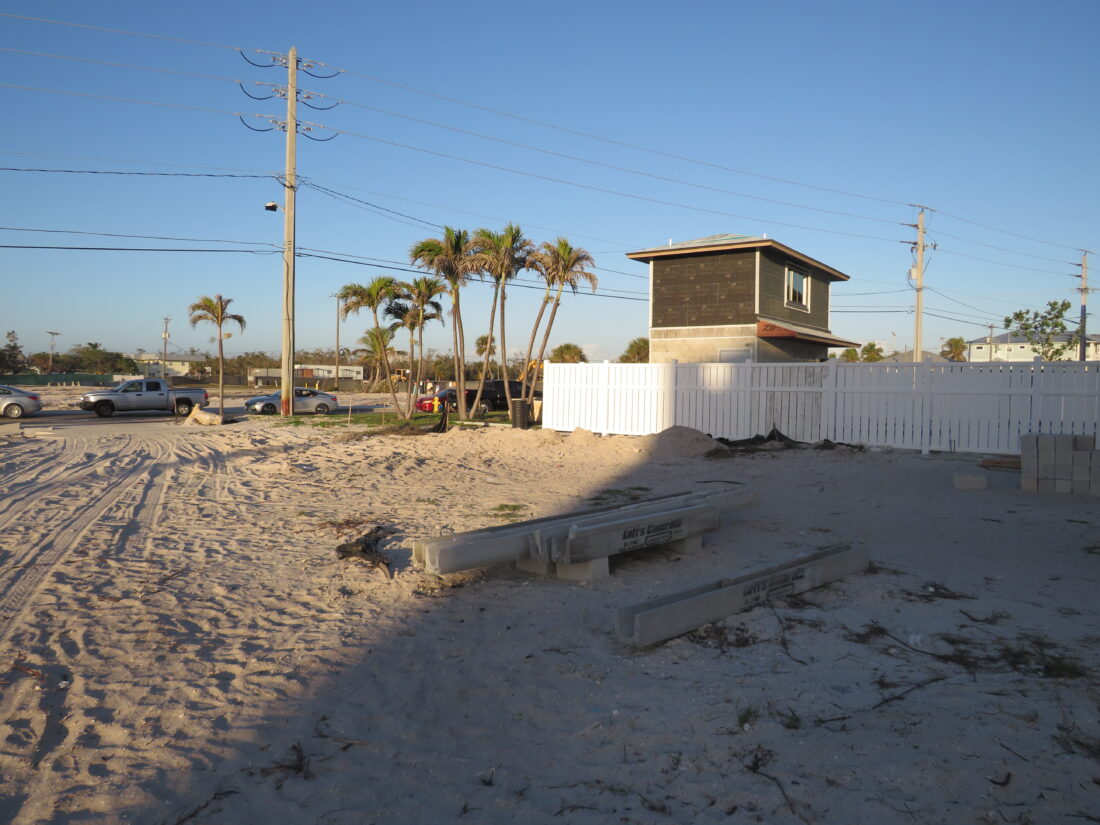
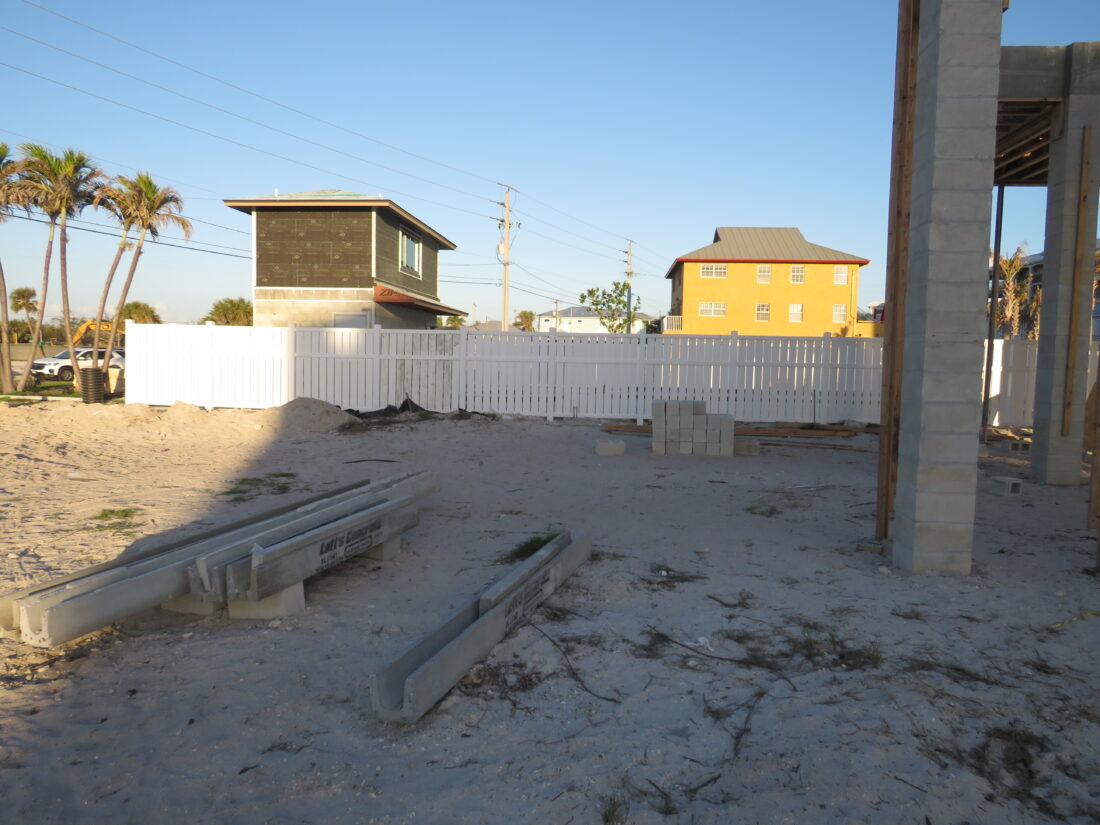
Two neighbors of where a food truck park would go on Fort Myers Beach, have filed a lawsuit in Lee County Circuit Court seeking to overturn the approvals given by the Town of Fort Myers Council.
The petition for writ of certiorari was brought by David Tezak and Helen Tezak and seeks to overturn the rezoning and development order for the food truck park, beer garden and 39 commercial parking lot spaces at 2500-2543 Estero Boulevard.
The 58-page lawsuit alleges that the Town of Fort Myers Beach Council’s approval of the food truck allows for commercial intrusion into a residential neighborhood, violates procedural due process, departed from the essential requirements of law, and was not supported by competent substantial evidence. The writ of certiorari alleges that the approvals by the town council violates Florida law and “is inconsistent with the Town’s Comprehensive Plan, constitutes illegal spot zoning, and is ultra vires – purporting to authorize a land use that is not permitted by any existing Town ordinance.”
The Tezak property is about 70 feet from the food truck park and is on land that is landlocked off Chapel Street.
The suit claims the Tezak family will be affected by the food truck park in terms of traffic, noise, safety, and loss of property value. The suit argues that the town council allowed for spot zoning when it approved the food truck park on property abutting a residential neighborhood on less than seven-tenths of an acre at 2500, 2510, and 2518 Estero Boulevard, and 2543 Cottage Avenue.
The food truck park includes a 3,000 square-foot building where alcohol will be served, pads and utility hookups for five food trucks to operate on-site daily and a parking lot with 39 spaces.
Mr. Tezak expressed opposition to the food truck park during an April hearing in front of the town council and had threatened to sue the town if the council approved the development. The food truck park had also faced opposition from the Pelican Watch condo building owners.
In addition to naming the Town of Fort Myers Beach in the writ of certiorari, Tezak also names the developer of the food truck park, Empire Holding Corporation, an Indiana Corporation as Trustee for Ann Trust, and The Neighborhood Company, a planning and design firm who represented the developers at the hearings in front of the town council.
Tezak, who accused the council of allowing spot zoning for the property during the April hearing, reiterated that charge in the lawsuit.
“The rezoning was tailored solely to benefit a single private developer, carving out an exception of less than 0.18 acre in a manner incompatible with the surrounding residential zoning,” Tezak said in the lawsuit. The lawsuit states that “Florida courts have invalidated when a small parcel is singled out for treatment inconsistent with the surrounding area and serving no broader public good.”
The lawsuit charges that the town council allowed for a use that doesn’t exist in the town’s Local Development Code.
“No provision in the Town’s LDC or Code permits a food truck park or open-air beer garden as a principal use,” the suit states. “Florida law requires municipalities to exercise zoning powers only through duly adopted ordinances of general applicability. Creating an ad hoc permission for this novel use via a Commercial Planned Development approval, without any supporting ordinance, was an ultra vires act exceeding the Town’s authority.”
Tezak also objected to the allowances of live music at the property.
As part of approvals from the town council, the park will stay open until 10 p.m. during the summer or daylight savings time, and only until 9 p.m. in the rest of the year. There would be limited hours for live music though ambient music would be allowed at all times of operation.
The project was unanimously approved by the town council after narrowly passing the Local Planning Agency by a vote of 4-3. Town planning staff had recommended approval with more than two dozen conditions after the property owners requested numerous deviations from town code. Tezak’s lawsuit puts the number of deviations requested at 31.
“The proposed beer garden and stage for live music would generate noise in very close proximity to homes (many within close proximity),” the suit states. “The Town’s code imposes noise limits and requires compatibility – yet no noise mitigation was required in the approval. Residents noted that continuous live music and crowd noise, especially at night, would destroy the residential peace and would violate Local Development Code Chapter 34, Article IV (“Noise Control”), constituting a common-law nuisance. The food truck operations also raise concerns about odors, garbage, and vermin, as well as public urination and trespass.”
The proposed food truck park would be just 15 feet from the fenced off community pool of the Pelican Watch. Photo by Nathan Mayberg
As part of a concession during April’s hearing, the property owners agreed to construct a 15 feet buffer between the Pelican Watch condo association’s community pool and the food truck park and beer garden building. The original plans would have put the building just seven feet from the pool.
“The Tezaks’ home is essentially being placed next door to an outdoor food and entertainment venue,” the suit states. “As a direct result of the Council’s decision, Petitioners face the loss of quiet enjoyment of their property, significant diminution in their property value, and threats to their safety and property rights.”
According to the writ of certiorari, the Tezak family have resided in the neighborhood for more than 35 years and intend to rebuild their home that was destroyed by Hurricane Ian in 2022. The property is located at 50 Chapel Street. David Tezak also has an interest in an adjacent residential property, 2440 Cottage Avenue, on the corner of Cottage Avenue and Chapel Street near the site of the park.
Fort Myers Beach Mayor Dan Allers said he had not reviewed the suit.