

Fort Myers Beach faces worst amount of sea turtle disorientations on record
Turtle Time estimates hundreds of hatchling deaths due to lighting violations
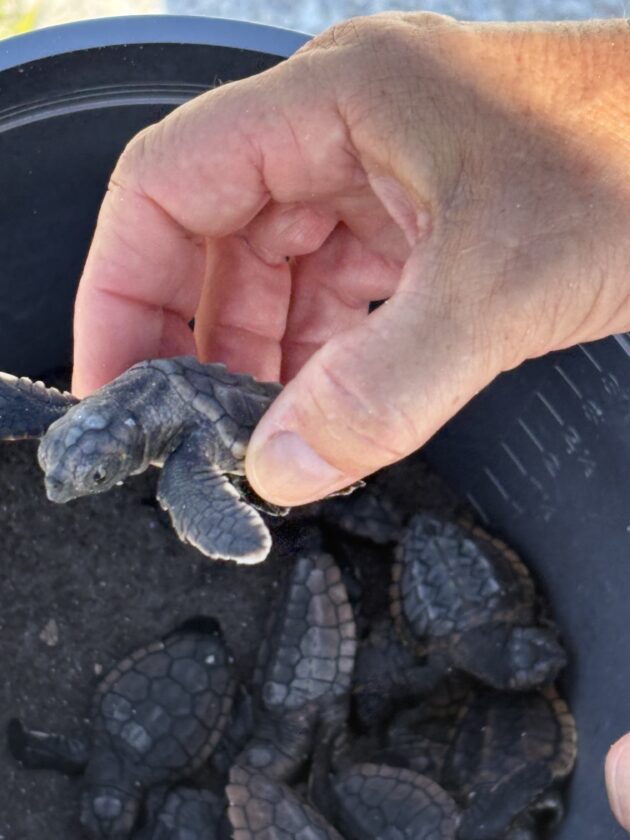
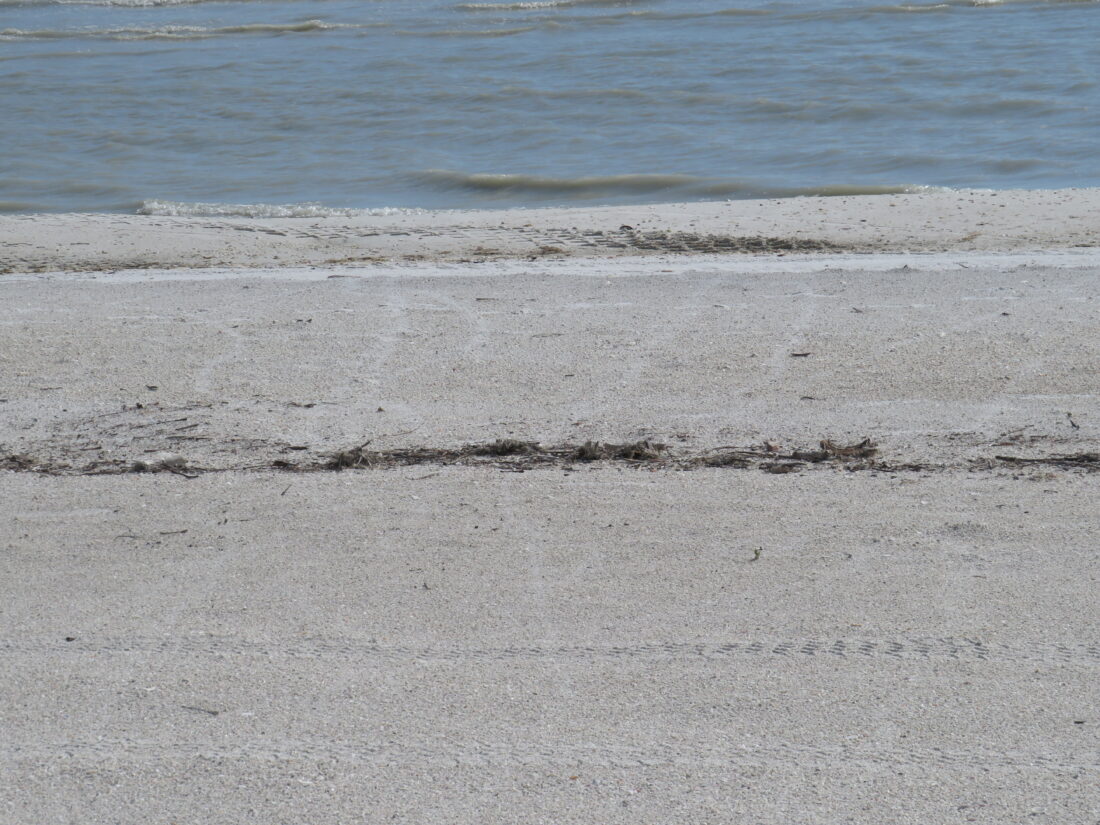
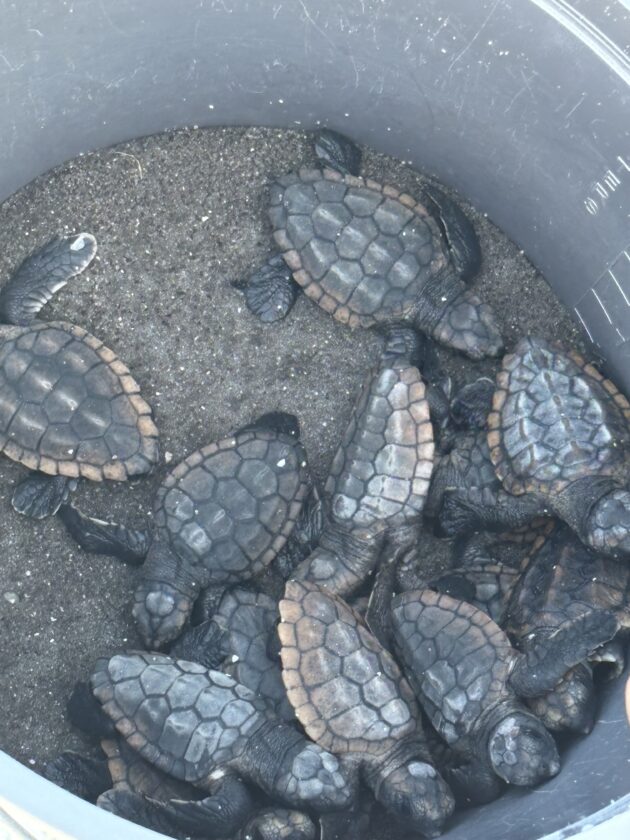
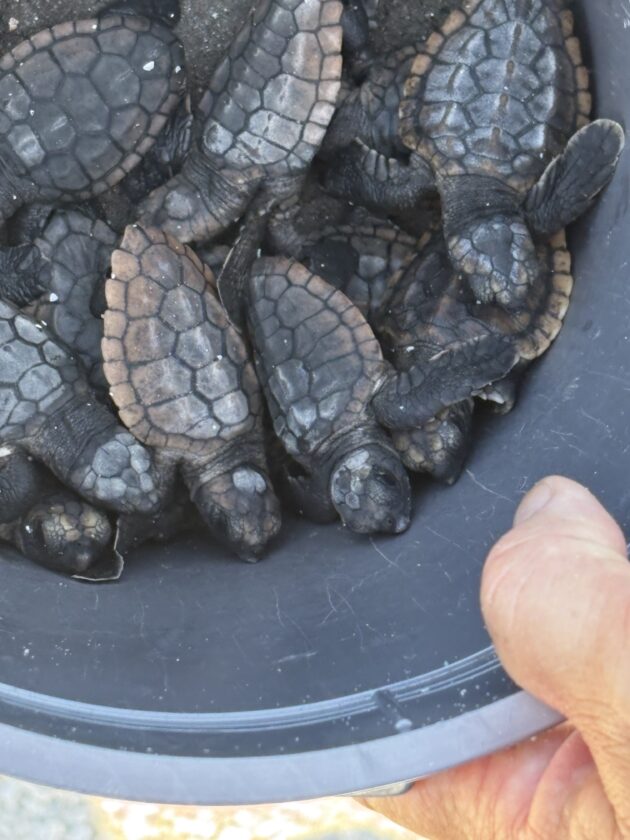
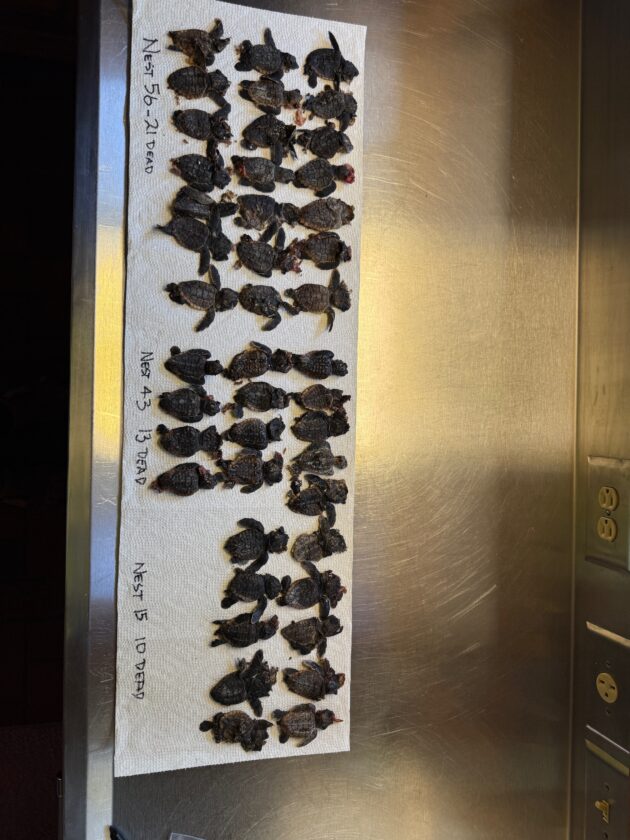
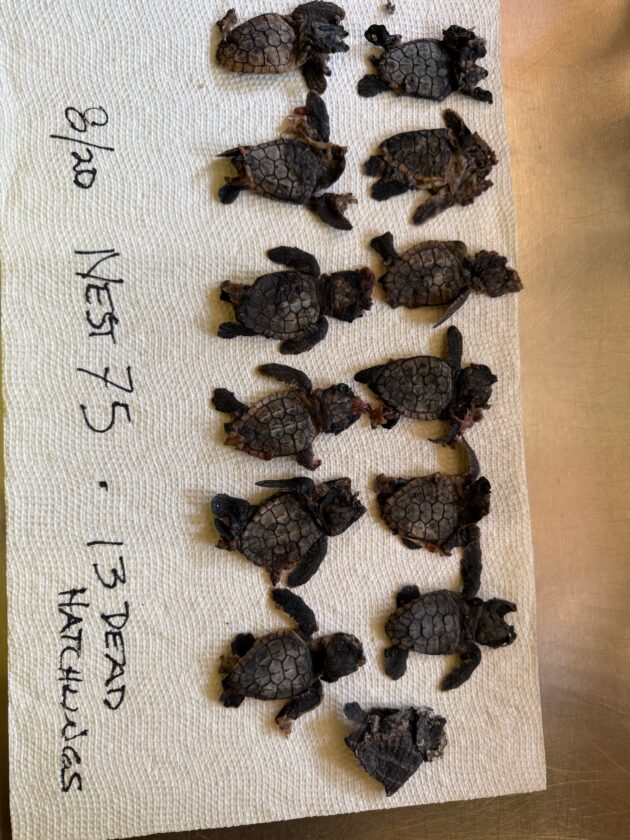
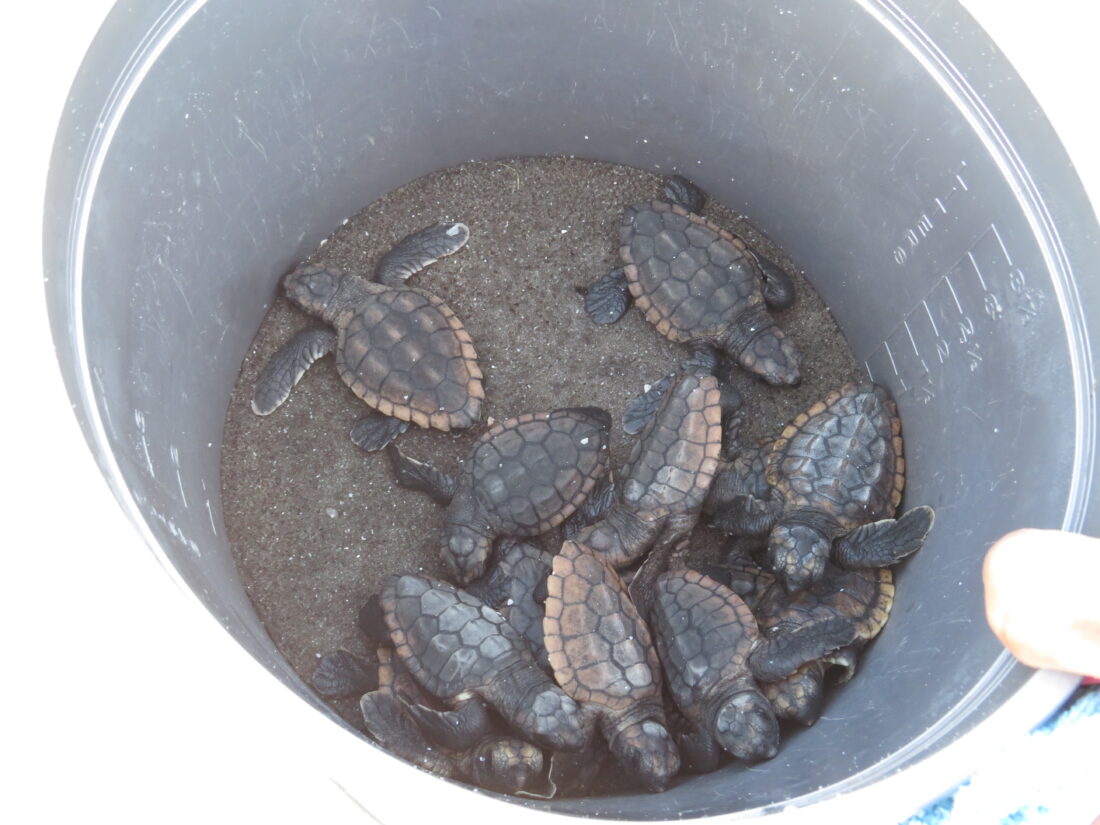
Hundreds of loggerhead sea turtle hatchlings have died on Fort Myers Beach this season in what is the worst disorientation crisis on the island for threatened sea turtles since Turtle Time began its monitoring and conservation efforts in 1989.
The cause? Lighting violations of the town’s sea turtle lighting ordinance which prohibits unshielded, non-amber LED outdoor lighting from dusk until dawn and which requires shads and curtains to be closed from 9 p.m. to 7 a.m.
Hatchlings attracted to the light are breaking out of their nests and instead of going into the Gulf, are heading towards the light of buildings where they will die due to dehydration, predation or the crush of motor vehicles when they cross onto Estero Boulevard.
For more than 35 years, Turtle Time founder Eve Haverfield has been out on Fort Myers Beach protecting turtle nests on Fort Myers Beach and protecting the hatchlings of threatened loggerhead sea turtles. Sea turtles are protected under the Endangered Species Act.
When Haverfield first started out on Fort Myers Beach in 1989 after years of working over on Sanibel, the lighting disorientations were so bad that she was spending mornings scraping off dead sea turtle hatchlings from Estero Boulevard.
As Turtle Time’s conservation efforts grew more successful and its educational outreach efforts helped diminish the disorientations, the gruesome stories of the disorientations became a flashback to a different, more disorganized time on the island before incorporation and where protecting sea turtle nests had not been as much of a priority.
Haverfield did not expect that this year the group she co-founded would be responding to more deadly disorientations than ever before.
Hundreds of hatchlings have been lost in the worst disorientation year on record since Turtle Time began keeping track more than 30 years ago.
There have been 28 nests that have disoriented, which is nearly half of the 58 nests that have hatched. Turtle Time has documented 113 loggerhead sea turtle nests this year, which is the second-most nests but due to the disorientations and several washed out nests recently, it has turned into a nightmare of a year for the organization.
The most disorientations before this year was 17 in 2023, and this season is not over yet.
A loggerhead sea turtle lays between 90 to 120 eggs in a nest. During a disorientation, some of the hatchlings will head to the Gulf like they are supposed to while some will become distracted by wavelengths of light shining from homes, businesses and other buildings and will instead heads toward the light. They will end up on Estero Boulevard, crushed by cars or get stuck in drain pipes or otherwise die of exhaustion. If they are lucky, they will end up in a pool where Turtle Time will respond and pick them up.
It wasn’t supposed to be like this.
Before Hurricane Ian, there would be occasional disorientations caused by homes or businesses that violated the town’s sea turtle lighting ordinance.
The ordinance restricts any home or business from shining visible light towards the beach from 9 p.m. to 7 a.m. All blinds and curtains must be shut. Outdoor lights must be shielded amber LED lighting that is downward directed in order to prevent disoritentations. Haverfield says any amber LED lights should be Florida Fish and Wildlife Conservation (FWC) certified as recommended on the website of the FWC.
Unfortunately, Hurricane Ian knocked down so many buildings and the island lost so many dunes, that much of the beach where the sea turtle nests are located became exposed. Whereas once the beach was protected from lighting by homes, dunes and vegetation, much of that has been lost. Now, buildings across the street on Estero Boulevard and down side streets that never were visible before can now interfere with hatchlings.
Haverfield and Turtle Time volunteer Cindy Johnson say there is an even bigger problem now that they have been working with town officials on addressing.
New construction, rebuilds and repairs have led to new lighting plans for buildings new and old that have introduced more lights that don’t abide by the turtle lighting ordinance and which aren’t amber LED lighting to avoid interfering with nesting and hatchlings.
Two properties in particular, which Turtle Time does not wish to name in hopes that town officials will be able to quickly quell the lighting problem, have installed new lights since Hurricane Ian near the center of town which they believe turtles are being lured to.
28 disorientations
Over the past week, there has been a sea turtle hatchling disorientation almost every night.
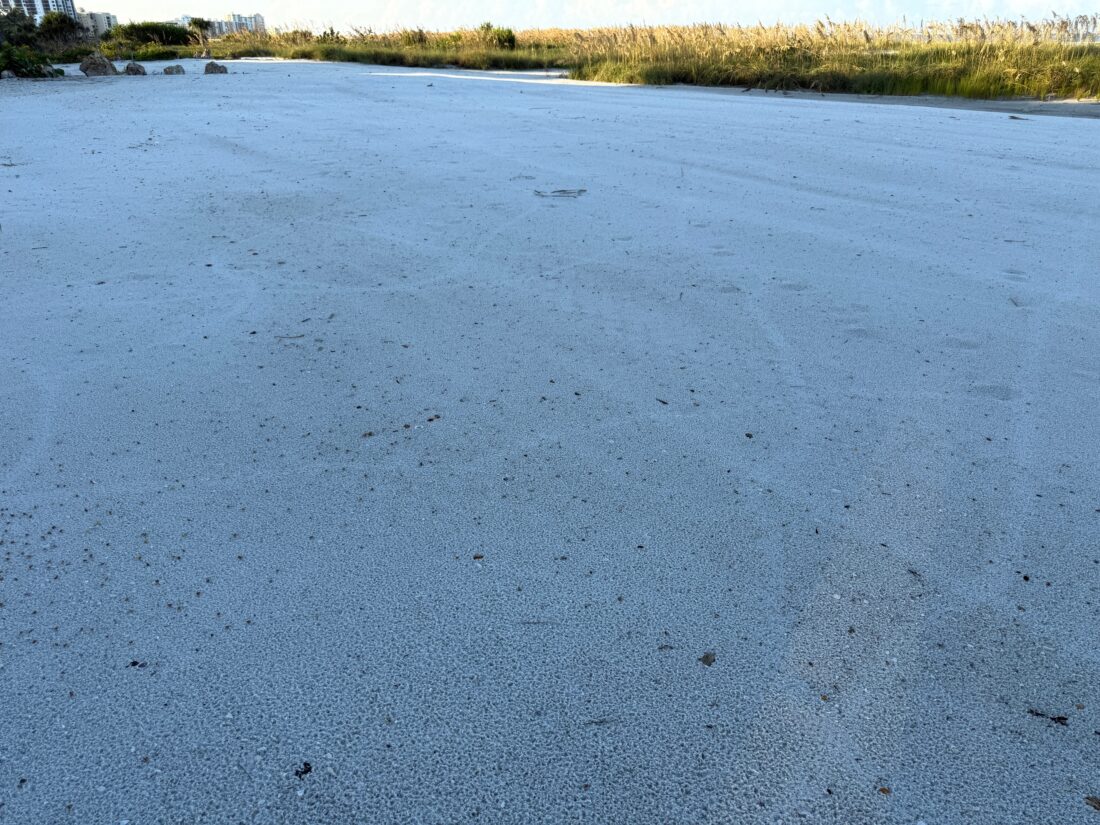
On Tuesday morning, one nest on the southern side of Fort Myers Beach near the Little Estero Island Critical Wildlife Area completely disoriented towards two condo buildings.
Johnson documented both buildings with multiple light violations the night before.
Johnson, Turtle Time volunteers, residents and vacationers at the condo buildings along with a worker were able to find and save 25 of the 90 hatchlings that disoriented. Some were found in pools, about 10 were found in a utility room, while a worker found some in a storm sewer. None of the others were found and there were no tracks to the Gulf, meaning they either died of dehydration or were consumed by birds who can easily spot them once dawn breaks.
On Tuesday night, there were two disorientations with nearly all being unrecoverable. One hatchling was recovered in a pool.
One recent disorientation occurred mid-island where a nest of hatchlings split, with some going straight into the Gulf and the rest following what Turtle Time believes is lights from a condo building and another property mid-island where new lighting has gone up.
In another disorientation, some of the turtles that went toward the lights went over a berm and ended up in three residential pools where they were luckily saved. Others were found on Estero Boulevard crushed by vehicles. One was killed by a ghost crab. Others likely died of dehydration or other causes.
Why did some go to the Gulf like they were supposed to while others went in other directions? Sea turtles act independently, Johnson said. They don’t all follow each other. Once they break away from the nest, they are on their own and will largely stay that way as they reach the Gulf and throughout their lives aside from mating. Once they become disoriented by the light, it is nearly impossible for them to find their way into the Gulf.
In addition to the 81 hatchlings from the disorientated nest, 11 had to be removed by Turtle Time volunteers after they were trapped by the roots in the nest. Johnson and Haverfield released the hatchlings that night. One of the heroic actions Turtle Time makes is inspecting all of the nests after they hatch to ensure that all of the hatchlings made it out. Turtle Time will release those that didn’t make it out at night in order to protect them from being caught by birds during the day. Turtle Time inventories the nests and makes reports to the Florida Fish and Wildlife Conservation Commission (FWC) as required under the permit to monitor the sea turtle activity on Fort Myers Beach.
Johnson said the disorientations are especially tragic for sea turtles since only one in 1,000 make it to adult sexual maturity due to the threats from sharks, boat strikes and other sea life in the Gulf. Out of more than 10,000 sea turtle eggs laid on Fort Myers Beach this year, perhaps 10 of the hatchlings will make it to adulthood. “It appears we’re not very good at conserving our turtles on Fort Myers Beach,” Johnson said.
Enforcement
The Town of Fort Myers Beach relies on Environmental Projects Coordinator Chadd Chustz to monitor the island for lighting violations, to notify residents and property owners where violations are occurring, and to correct them.
Back in 2022 during a spate of seven disorientations, the town issued 220 warnings for lighting violations. Of those violations, the town issued 44 citations with a total of $19,050 in fines.
Currently, there are 41 open lighting cases according to Town of Fort Myers Beach Will McKannay. Though Chustz didn’t respond to questions about the number of citations, warnings or fines this year, McKannay responded on behalf of the town’s management by saying the town will “likely resolve approximately 90% of these through proactive outreach, including phone calls and emails. For non-responsive properties, we will escalate enforcement by issuing formal notices of violation, which can lead to penalties if not addressed.”
There are no records of any fines having been issued so far this year for turtle lighting violations. The town’s approach to enforcing its turtle lighting ordinance has been less aggressive since a change in management and the town’s political leadership after Hurricane Ian. There have been far less warnings, citations and fines issued since 2022.
The number of violations issued this year, while still far fewer than in 2022, is up from last year,
In 2024, there were only five cases opened for sea turtle lighting ordinance violations and only two violations issued.
Haverfield said that while the town used to have two people dedicated to dealing with the lighting ordinance, the enforcement and monitoring is now largely dealt with solely by Chustz. “If necessary, cases are referred to our code compliance department,” McKannay said.
While Turtle Time is routinely documenting lighting violations at night, they lack the enforcement capabilities that are left to Chustz to enforce.
Haverfield said Turtle Time ideally hopes that lighting issues at different buildings be addressed in May and June before the hatching of the nests begins in July.
Johnson noted one new luxury beachfront building being constructed on the southern side of the island which has been photographed full of lights at night.
New Town Manager taking the problem seriously
McKannay is taking the sea turtle issue seriously. He has a familiarity with sea turtles from his Army background. In response to the disorientation crisis.
“The Town is aware of increased sea turtle disorientations this season, including tragic incidents where hatchlings reached Estero Boulevard. We are actively working with Turtle Time and other partners to monitor and address these issues,” McKannay said.
“Disorientations are largely due to lighting violations and the loss of vegetation from Hurricane Ian, which has made artificial lighting more visible–even from properties not directly on the beach,” he said.
McKannay said the town is engaging property owners quickly when violations are observed and issuing notices and escalating penalties for non-compliance.
“Our focus right now is on rapid response to lighting near nests that are close to hatching, which requires daily monitoring and coordination. While we are making steady progress and the community has been largely responsive, new lighting issues continue to emerge–sometimes from properties as far back as the Bay.”
McKannay said town officials are conducting weekly inspections and follow-ups, and plans to have staff review lighting plans and post-construction compliance more thoroughly.
Haverfield and Johnson believe this is one of the most important proactive steps the town can make. They want town staff to review lighting plans for all new construction more carefully to ensure new projects, especially those with detailed lighting plans, are reviewed to ensure any outdoor lighting is shielded, amber LED lighting in order to comply with the town’s turtle lighting ordinance to avoid future disorientations.
Haverfield said the town needs an organized plan for reviewing lighting so that property owners and electrical engineers know what kind of lighting they need and that the town reviews the lighting when it is installed to ensure it is compliant.
“We urge all residents and businesses to follow the Town’s Sea Turtle Lighting Ordinance,” McKannay said. “Use amber or red LED bulbs, shield interior lights, and avoid flashlights on the beach at night. There are still over 50 nests left to hatch this season. Your lights can save lives.”
On Tuesday, the town sent out an advisory to the public about the spate of turtle disorientations and a reminder about the town’s turtle lighting ordinance. The letter was focused on local contractors working on construction site, reminding them that any outdoor lighting, including construction lighting must be downward-directed, shielded, long-wavelengths amber, orange or red LED bulbs.
The town advises the public to install blackout curtains or blinds on beach-facing windows and to turn off unnecessary lights inside that could be a distraction to sea turtles from the beach.
Every building on Fort Myers Beach is required to abide by the lighting ordinance
No property on Fort Myers Beach is immune from the sea turtle lighting ordinance. Every property and home is subject to the sea turtle lighting ordinance. Due to the loss of buildings from Hurricane Ian, many more homes on Fort Myers Beach have the potential to cause a disorientation than ever before.
Some hotels have been proactive about the situation, with the Pink Shell Beach Resort and Marina conducting a full overhaul of its lighting in recent years with a grant from the Sea Turtle Conservancy to install turtle-friendly lighting outdoors. The resort also installed turtle-friendly tinted windows which negate the need for residents to remember to close their curtains at night or turn off their lights.
The DiamondHead Beach resort spent $1 million to install turtle-friendly windows and new sliding glass doors at a .28 tint which will prevent indoor lighting from interfering with nesting and hatching threatened sea turtles. The resort also installed turtle-friendly lighting in its parking lots.
Some condo buildings have signs in their elevators reminding vacation renters about the sea turtle lighting ordinance but it doesn’t always work.
Disorientations preventable
“It’s been a dismal year,” Haverfield said. Most frustrating for Haverfeld is that “it’s preventable.”
All it takes is for property owners and those visiting the island to keep off outdoor lights or shield them with amber LED lights which can be found on the FWC’s website or at Home Depot.
Haverfield said lights from construction equipment and other new lighting from new construction is a likely culprit of the increased disorientations.
Haverfield said she is hopeful that the town’s efforts to work with property owners and contractors will bear fruit and end the lighting disorientations.
In addition to the deadly disorientations a storm over the weekend likely led to several nests being washed out and lost. Three nests washed away in the storm, which means 300 or more hatchlings likely died.
It’s hard to know exactly how many hatchlings were lost as Turtle Time can only count the dead bodies it finds, not the ones that get lost under buildings, in drainage pipes or in vegetation or who are captured by birds and other animals.
“We just have too many disorientations,” Haverfield said.
“It’s disheartening when so few survive to adulthood and we can’t even get them out to the Gulf,” Haverfield said.
“The elephant in the room is we don’t have dunes and dune vegetations so a lot of light is visible that never was,” Haverfield said. “A lot of people on side streets who never had to be concerned about lights are now sending light towards the beach.”
Haverfield says Turtle Time doesn’t want anyone to be unsafe just to use safe lights. Haverfield said property owners should use amber LED lights but she said many new outdoor lights going up are white LED lights, which are the cheapest and most disorientating light for turtles.
Relocations
Turtle Time has relocated 44 nests this season due to the beach renourishment project, which is finally wrapping up this week, nearly seven months after it was supposed to be completed. The project caused major disruptions to nesting sea turtles due to the piping spread out along the beach. The piping led to a record number of false crawls by nesting sea turtles, who turned away from the piping. There have been 314 false crawls this year, which is about double compared to a normal year though last year there were 238 false crawls, which is when the beach renourishment project began. The numbers suggest an uptick in false crawls since Hurricane Ian as well caused by the loss of buildings and vegetation that previously blocked lighting . There were 201 false crawls in 2023 after Hurricane Ian and 158 in 2022, before Hurricane Ian. There were 130 false crawls in 2021.
The berm that was put up by the town after Hurricane Ian “saved us,” Haverfield said.
Turtle Time was able to relocate the nests near the berm, where the beach sand is elevated. In many other places around the beach, the sand is flat which leaves the turtles unable to lay their eggs.
On the bright side
There is some positive news though. The town’s lighting project is currently underway. The state approved more than $7.7 million for turtle-friendly lights along Estero Boulevard and side streets on Fort Myers Beach.
The 113 nests on Fort Myers Beach this year is the most since there was a record of 132 nests in 2020. The number of nests on Fort Myers Beach has risen dramatically in the past decade, average more than double to triple the number of nests that were seen on the beach 15 to 20 years ago. When Haverfield started, there were just a handful of sea turtle nests on Fort Myers Beach.
Haverfield and Johnson credit the increased nests to educational efforts which have significantly reduced lighting on the beach at night over the years. Nesting sea turtles will hesitate to nest where there is lighting at night. Sea turtles will also return to nest from where they hatched. It can take 20 to 30 years for loggerhead sea turtles to reach sexual maturity to reproduce, and they only do so on average every two years. Many of the sea turtles nesting now are the products of conservation efforts from Turtle Time taken over the past 35 years.
“We are committed to protecting our sea turtles and will continue to enforce the ordinance with urgency and consistency,” McKannay said.
Fort Myers Beach Mayor Dan Allers did not respond to a message seeking comment.
“It’s a real sad, lost year for the hatchlings,” Haverfield said. “Hopefully we can make it up next year.”
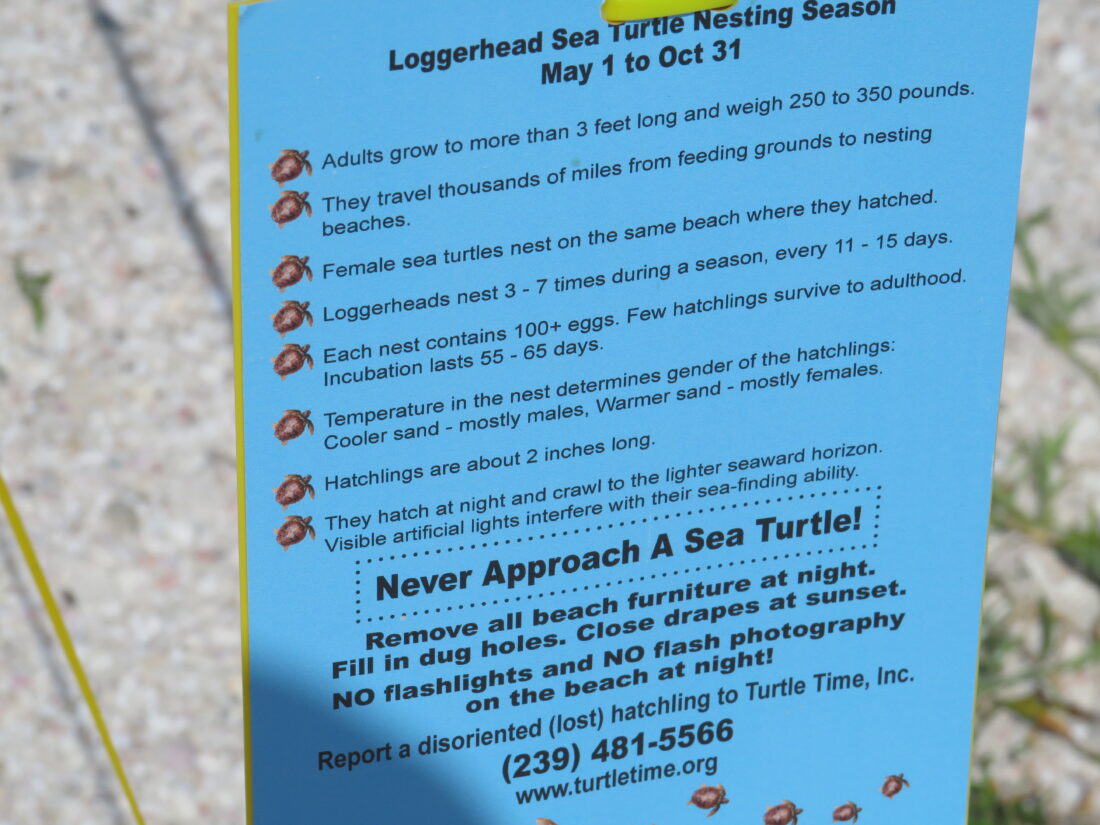
The public should never interact with a nesting sea turtle or hatchlings. If hatchlings should end up on your property or in a pool during a disorientation, contact Turtle Time at 239-481-5566. One of the dozens of Turtle Time volunteers on Fort Myers Beach will respond.
“This is a magnificent island we have,” Haverfield said. “We are part of an international effort to make sure the sea turtles survive.”