

Boat speeding in manatee zones on bay concerning to Fort Myers Beach MERTF member
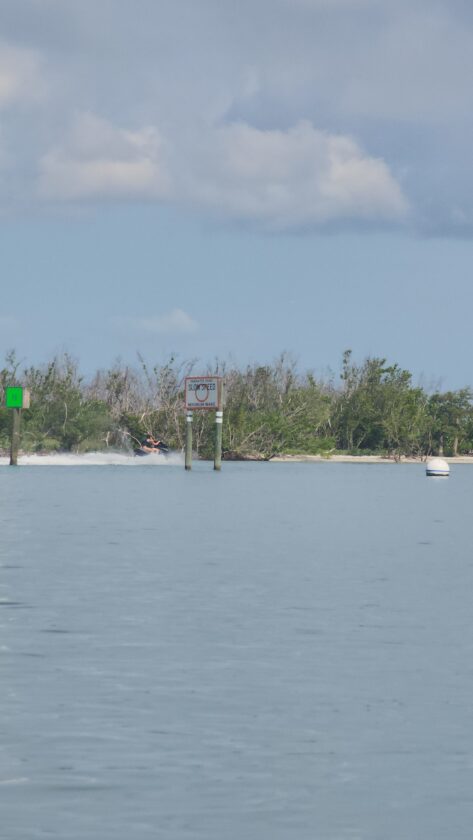
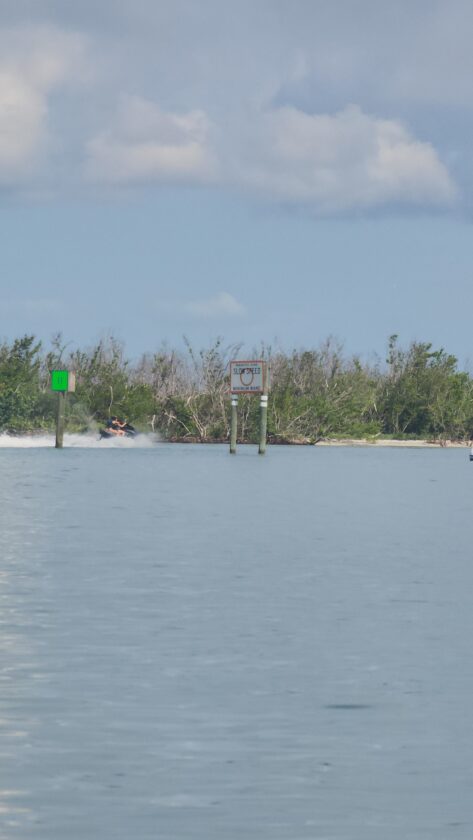
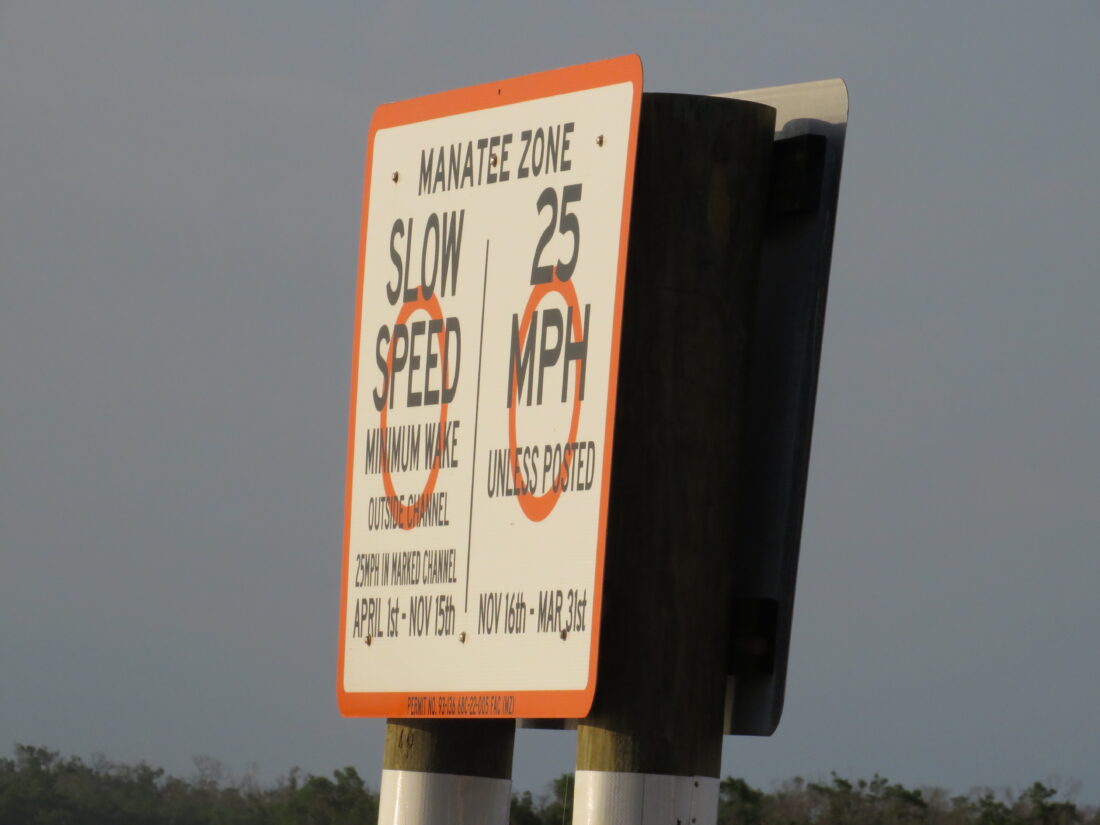
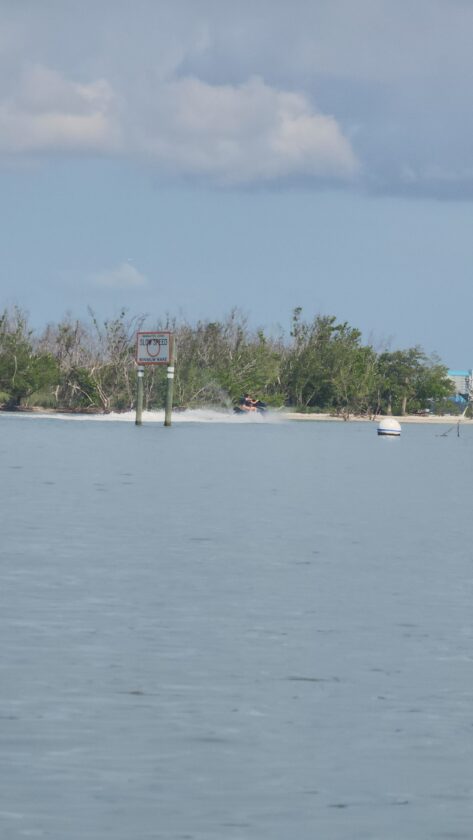
Fort Myers Beach Marine and Environmental Resources Task Force member Rob Howell is sounding the alarm of what he believes is a problem with speeding boats on the back bay of Fort Myers Beach.
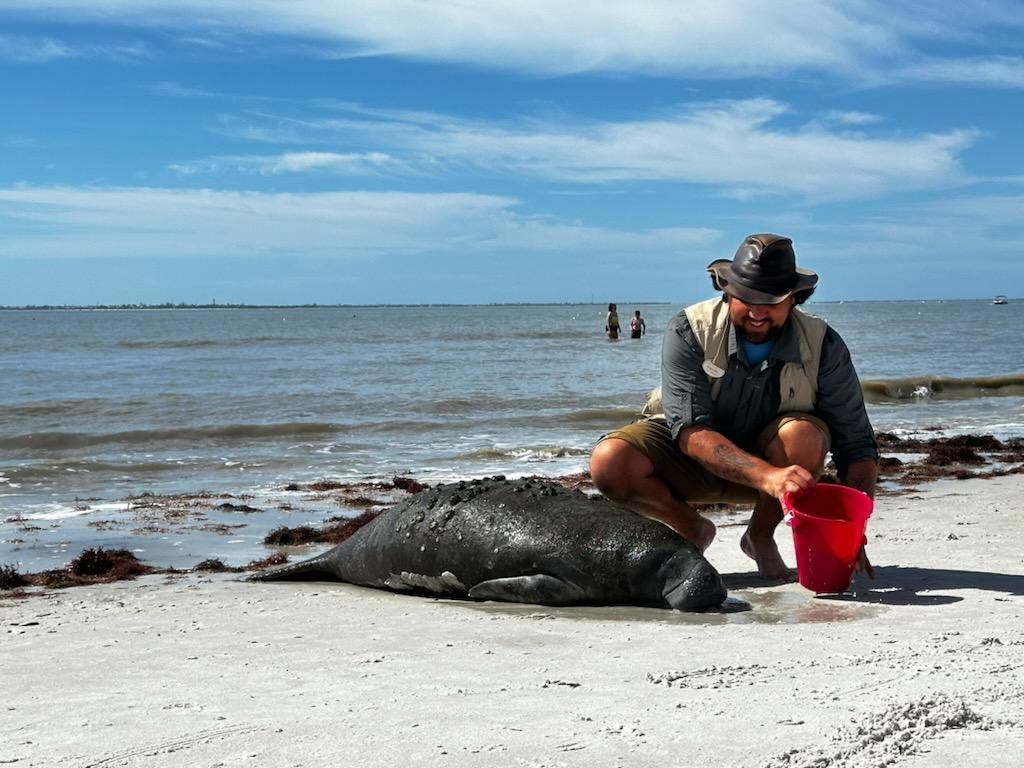
It’s a problem he believes has contributed to manatees washing ashore with boat strike marks and to two dolphins he says he has spotted missing part of their fins.
Howell, who is known locally as “Ranger Rob” and who has served as the naturalist at the Pink Shell Beach Resort and Marina, recently took to Facebook to ask for the public’s help in slowing down boat traffic.
“I’m out there seeing the scars of the dead animals,” Howell said. Last year, Howell responded to a manatee that had washed ashore from the Gulf in front of the Pink Shell Beach Resort and Marina and which ended up dying after emergency responders from the Florida Fish and Wildlife Conservation Commission transported the manatee for treatment.
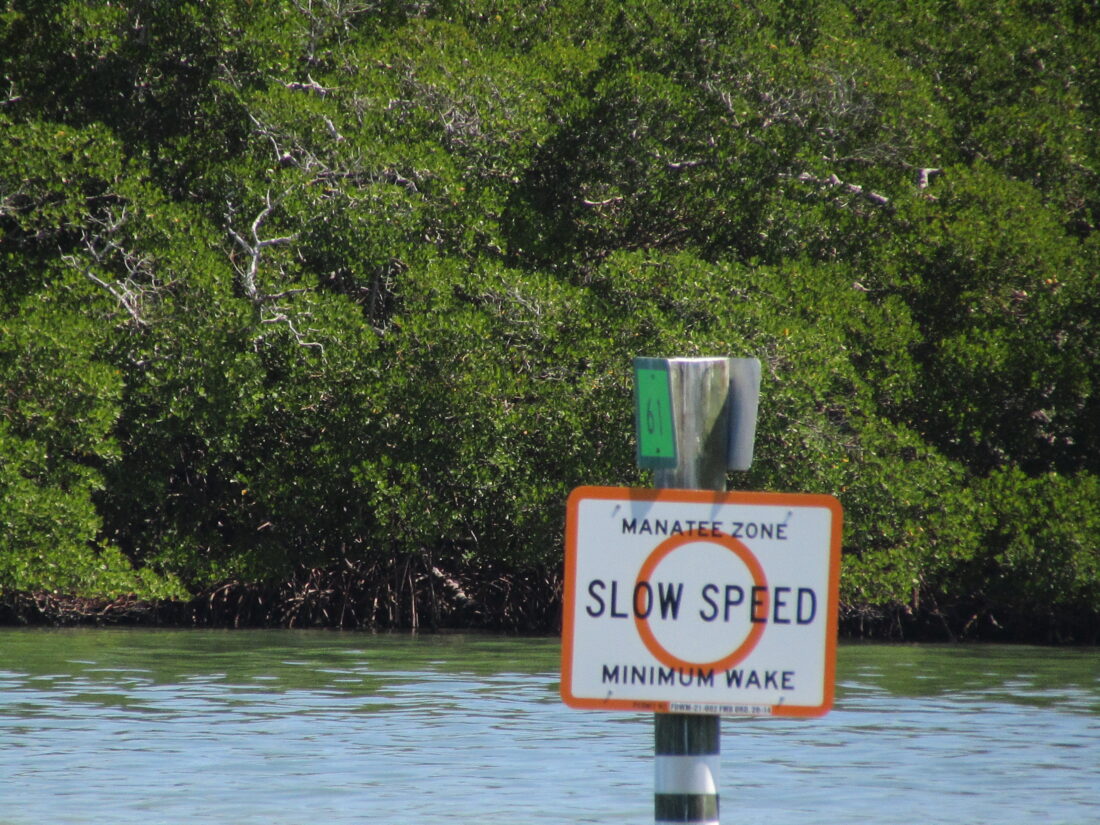
In an area in the bay of Fort Myers Beach between Matanzas Pass and Pelican Bay where there are signs reminding boats of the slow speed manatee zones that the Town of Fort Myers Beach instituted, Howell said boaters don’t always know how slow they should be going if they are not local and just renting a boat while on vacation.
“Every day it’s still awful,” Howell said. “Especially during the holiday season. There is little to no patrolling out there. It’s sad.”
Howell believes the issue is largely from those renting boats who don’t have a captain’s license and who he says “just don’t know any better.”
Howell leads kayak tours on the back bay with resort guests and other nature programs. When he tries to communicate with boaters speeding through the back bay he says they “yell back at me.” He says they don’t understand that the “slow speed” signs in the manatee zones are meant to prevent wake and that they aren’t adhered to.
In 2021, after a grass-roots effort led by Fort Myers Beach residents in the Bay Beach Lane community, new slow-speed, no wake signs were placed in the waters of the back bay by Lee County to protect the manatee zones there. In 2020, The Town of Fort Myers Beach Council approved the manatee protection zone from Matanzas Pass through Estero Bay, Coon Key and Buccaneer Lagoon on the south end of Estero Island after complaints about speeding boaters in the bay.
A signature drive by the group “No Wake in the Back Bay” received more than 600 signatures from town residents in support of the manatee zones.
Howell said there has been a limited patrol presence from Florida Fish and Wildlife Conservation Commission (FWC) boats and a less visible presence from the Lee County Sheriff’s Office.
Howell said his main goal is to raise awareness about the slow speed zones in the bay. He is concerned about the seagrass beds that the manatees and other wildlife rely upon.
“If we can just slow people down, it would make a difference,” he said. Howell said he gets concerned when he sees fast-moving boats getting close to dolphins. “It’s dangerous for the dolphins.”
In the last year, Howell said he has seen two dolphins with injuries to their fins. “We pulled a dead manatee out a week ago with scarring just south of the island,” he said.
FWC officials said they were searching records regarding any reports of dolphin injuries on Fort Myers Beach.
FWC spokesman Bradley Johnson said the FWC “is committed to the protection of Florida’s marine mammals and the safety of all who enjoy our state’s waterways. In the Estero Bay and Fort Myers Beach area, FWC officers prioritize the enforcement of manatee protection zones and designated slow speed zones to help reduce the risk of injury or death to marine mammals caused by vessel strikes. By enforcing these protections, the FWC not only safeguards vulnerable wildlife but also enhances public safety by reducing the risk of boating accidents and collisions. We take public safety and wildlife violations seriously.”
Johnson said the FWC urges the public “to be vigilant on the water and to report any concerns about speeding vessels or violations in manatee protection zones by calling our Wildlife Alert Hotline at 888-404-3922.”
Lee County Sheriff’s Office Capt. Todd Olmer, who has served with the agency’s Marine Unit, and who has previously served with the Coast Guard on Fort Myers Beach, said he has assisted with many manatee and dolphin calls on Fort Myers Beach during his career though he referred questions about the most recent reports to the FWC.
“Our LCSO Marine Unit is pro-active with patrolling the waterways of Lee County, and especially Fort Myers Beach given the high amount of boat traffic on the Gulf of America side, and the back bay and the estuaries,” Olmer said. “During the weekend, when boating traffic is high, there are LCSO Marine Unit patrols dedicated to Fort Myers Beach. These are in addition to the countywide Marine Unit patrols. We also work with the other agencies on the water when concerns are raised whether it be speed, wake, or vessel operations, so that it can be addressed quickly. It is necessary for the agencies to keep this communication since some areas are so shallow that specialty boats such as LCSO’s low-draft boats can navigate in these waterways.”
Olmer said the office would be looking into speeding reports and tickets for the area. The fine for striking a manatee is $88.
Manatee deaths
Manatee deaths have long been a problem in Lee County waters, with the county annually among the top two or three counties in the state for manatee deaths. Once a symbol for the Endangered Species Act, the marine mammal was downlisted to threatened in 2017 by the U.S. Fish and Wildlife Service. Since then, the mammal has underwent some of its greatest losses on record. Earlier this year, the U.S. Fish and Wildlife Service denied a request from environmental organizations to relist the manatee as an endangered species after several years of an unusually high dying-off event that has been a combination of the effects of a loss of seagrass beds due to pollution and boat strikes. The manatee is still protected under the Endangered Species Act as threatened.
Through June 27, the Florida Fish and Wildlife Conservation Commission (FWC) has recorded 86 manatee deaths in Lee County waters, which is just four shy of the number of manatee deaths recorded in Brevard County. Of the 86 manatee deaths in Lee County so far this year, eight were classified as the victims of watercraft or boats though more than half of the manatees (48) found dead were not necropsied.
Few of the manatee deaths in Lee County this year have been on Fort Myers Beach. Most have been in the areas around the Caloosahatchee River and Orange River off Fort Myers, Matlacha Pass and the Caloosahatchee River in Cape Coral, Pine Island Sound and Manatee Bay in St. James City and San Carlos Pass off Sanibel.
The FWC last documented a dead manatee in the Gulf off Fort Myers Beach on May 14. There was no cause cited by the FWC and the manatee was not necropsied.
Last year, there were six manatees found dead on Fort Myers Beach. Two of those deaths were confirmed watercraft collisions while two others were perinatal cases and two were not necropsied for a cause.
Last year, Lee County led the state in confirmed fatal watercraft collisions with manatees, with 12. That was the first year Lee County led the state in fatal watercraft collisions with manatees since 2019.
In 2024, there were 565 recorded manatees deaths throughout Florida. Of those, 96 were attributed to watercraft strikes and 228 deaths were not necropsied or whose cause of death was undetermined.
So far in 2025, there have already been 445 manatee deaths throughout the state. Of those, 58 have been confirmed as watercraft collisions while 199 were either undetermined or not necropsied. Eight of those fatal watercraft collisions have been in Lee County, which is the second-most to Citrus County.
In 2023, there were 555 manatee deaths recorded throughout Florida. Of those, 89 were considered watercraft collisions while 250 were undetermined or not necropsied.
In 2022, there were 800 manatee deaths throughout Florida. There were 1,100 manatee deaths in 2021, which is a record after a mass starvation event largely blamed on the loss of seagrass due to pollution in the Indian River lagoon in Brevard County as well as a cold weather event. The Center for Biological Diversity has blamed much of the deaths on water-quality degradation across the state that has led to precipitous seagrass declines from wastewater treatment discharges, leaking septic systems, fertilizer runoff are among the largest culprits.
In 2019, there were 607 manatee deaths in Florida, with Lee County leading the way with 146. Lee County also led Florida in Manatee deaths in 2018 with 182, which was the year of a devastating red tide event that continued into 2019. In 2018 and 2019, Lee County also led the state in confirmed fatal watercraft collisions with manatees.