

Sea turtle nesting season begins

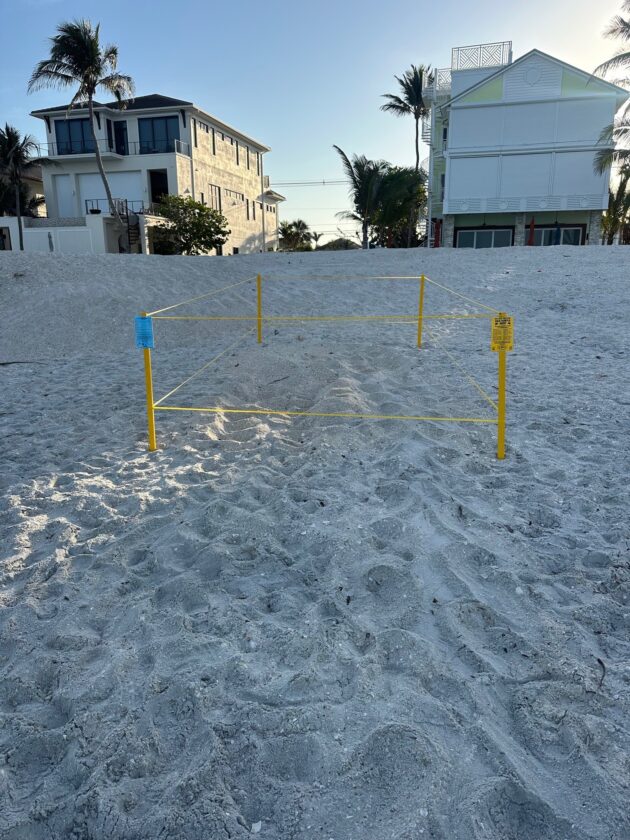
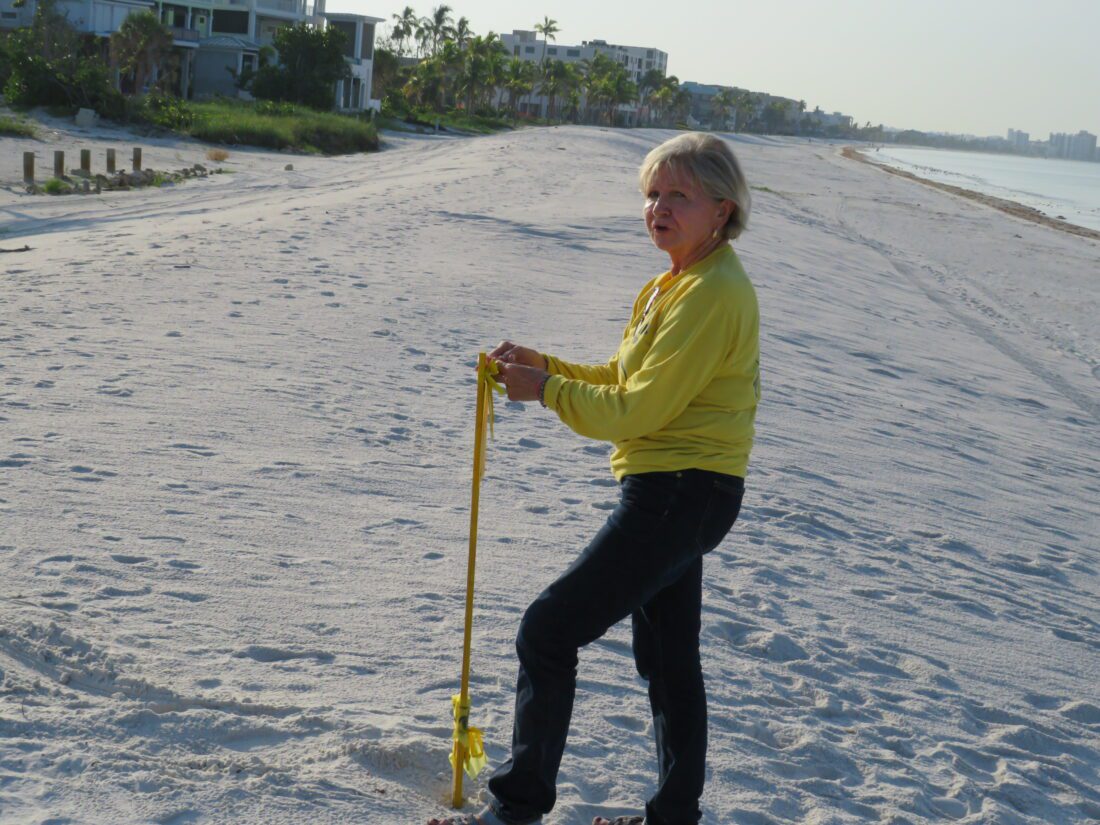
Each year, threatened sea turtle mothers return to Fort Myers Beach out of natural maternal instinct to crawl onto the beach in the dead of night and dig out nests to lay their eggs. Eggs they will never see hatch and hatchlings they will never see grow. It’s a routine the threatened species has been doing for tens of millions of years.
On Fort Myers Beach, the loggerhead sea turtle nesting season officially begins Thursday, May 1 and will run through Oct. 31 during which time outdoor, unshielded non-amber lights are prohibited from 9 p.m. to 7 a.m. The town’s turtle lighting ordinance also requires drapes and curtains to be closed over windows during that time. Lights should also be moved as far away from windows as possible.
While the season doesn’t officially get underway until Thursday, nearby Bonita Beach has already seen its first loggerhead sea turtle nest. Turtle Time volunteers have been out scoping Fort Myers Beach for turtle nests since April 15.
Turtle Time founder Eve Haverfield and her organization are responsible for a resurgence of loggerhead nesting activity on the island. When her organization was first formed in 1989 to protect the threatened sea turtles, nests were far fewer and hatchlings often ended dead in the road due to light disorientations.
While there are many more nests now, light disorientations are still a problem and Haverfield is hopeful the word will get out better this year for lights to be turned off from 9 p.m. to 7 a.m. Some hotels, like the Pink Shell Beach Resort, have even taken the steps of installing turtle-friendly tinted windows and turtle lighting to protect against disorientations.
Haverfield has an additional concern this year dealing with the town’s beach renourishment sand dredging pipe project which was supposed to be completed before seat turtle nesting season so as not to interfere with sea turtles that are protected under the Endangered Species Act.
Haverfield is concerned how the piping and tractor activity will impact the sea turtle nesting habits. They could potentially lead the turtles to turning away from the beach and heading back to the Gulf. Haverfield said the piping won’t be an issue where it is underground on the northern end of the island and south of Lanark Avenue, but will be an issue between the Junkanoo property and Lanark where it is over the beach.
Haverfield said she and her teams will have to move nests that are in the construction zone. “We’re going to do the best we can for the turtles,” she said.
The relocation work has to be done extremely delicately so as not to harm the embryo. Is it difficult and time-consuming work for Haverfield and her Turtle Time team of volunteers.
“It’s hard work relocating a nest and it has to be done scientifically, properly and meticulously,” Haverfield said.
“The problem that we see now is there is no dune, no berm, no buffer, no protective dune. A lot of people don’t want dune vegetation,” Haverfield said. “The dune vegetation stabilizes the beach and keeps the sand from blowing out.”
Haverfield said dunes are good for both sea turtles and residents of the beach in protecting against future hurricanes.
“The dune vegetation traps sand and stabilizes sand,” Haverfield said.
Without the dunes, the sand becomes flatter and less hospitable to nesting sea turtles as well as making the beach more vulnerable to flooding.
The contractors Ahtna Marine Construction Company, who have been doing the sand dredging and beach renourishment for the town, were required by the town to complete the project in January as part of their contract but were given an extension due to Hurricane Helene and Hurricane Milton. That extension was then extended again into shorebird nesting season which began Feb. 15 and then further into March and then April and now into sea turtle nesting season. The contractors were recently given approval by the town and Florida Department of Environmental Protection to extend their project to May 31.
Fort Myers Beach Environmental Projects Manager Chadd Chustz, said another extension might be needed past that date as well.
Chustz has been distributing sea turtles and lighting pamphlets from the Sea Turtle Conservancy to educate residents and the public about the sea turtle nesting season and the detrimental impacts that lights can have on their nesting habits and the deadly disorientations that can occur for hatchlings.
Haverfield said that there were six bad disorientations of sea turtle hatchlings this past year, including several deadly disorientations of turtle hatchlings where dead hatchlings were found in the road on Estero Boulevard near Connecticut St. and south of the Sterling Avenue intersection. “We scraped them off the road,” Haverfield said. “It was pretty bad.”
Haverfield said the hatchlings were attracted to light on the other side of Estero Boulevard.
Haverfield said most of the problem was situated on the southern end of the island where drapes weren’t closed or outdoor lights weren’t shielded. Part of Haverfield’s work involves notifying the town of the turtle hatchling disorientations as well as the state.
“There is room for improvement. Much needs to be done to inform the residents and guests on Fort Myers Beach,” Haverfield said.
Haverfield stressed that amber LED lights that are shielded are the best way for residents to have outdoor lighting that won’t interfere with nesting sea turtles and hatchlings.
It was a tough year for threatened sea turtles on Fort Myers Beach last year, where nests of loggerheads experienced significant hardships from three hurricanes and other heavy rainfall events in 2024.
While 109 loggerhead sea turtle nests were identified, only 28 of those nests had hatchlings, Haverfield said. The majority of the loggerhead sea turtle nests were washed out and the embryos drowned. In some of the nests, only one or two of the hatchlings made it out. Only 21% of the eggs in the 109 nests survived on Fort Myers Beach.
Haverfield said half of the nests on Fort Myers Beach were washed out during a rain event in June. Some of the loggerhead sea turtles re-nested after June but some of those nests were wiped out by Hurricane Debby in July and then Hurricane Helene in September, Haverfield said.
The number of total nests on Fort Myers beach were the same as 2022, giving some optimism to Haverfield that the sea turtle population that nests on Fort Myers Beach each year is still healthy. In 2023, there were 71 loggerhead sea turtle nests. Loggerheads lay nests on average every other year and are a threatened species protected under the Endangered Species Act.
The town’s enforcement of lighting violations was much more lax last year than in years past. Only a handful of lighting violations were issued last year.
The town’s enforcement of its turtle lighting ordinance last year differed vastly from 2022, when the town issued 220 warnings for lighting violations. Of those violations, the town issued 44 citations with a total of $19,050 in fines.
Chustz said the town’s staff prefers to notify property owners of lighting violations first by phone or email by educating them before administrative citations are issued.
While a nesting sea turtle can lay dozens of eggs, it is possible that of all the hundreds of eggs laid on Fort Myers Beach this year, only a handful of the hatchlings will make it to adulthood due to the threats they face in the water.
Turtle Time has dozens of volunteers on Fort Myers Beach who check the beach each morning at dawn to see if any turtle nests have been dug and then tapes them off.
“There are many people on Fort Myers Beach who are turtle friendly and we count on them to keep the turtles safe by closing their drapes,” Haverfield said.
Sea Turtle Nesting Season Tips:
Pick up all trash, especially plastic bags that turtles mistake for jellyfish.
Fill in holes and flatten sandcastles after your beach visit.
Keep a respectful distance from nesting turtles or hatchlings–never touch or disturb them.
Do not interact with or shine lights on turtle nests.
Avoid flashlights or phone lights on the beach at night.
Residents and businesses: Use sea turtle-friendly lighting.
Install protective window treatments to block indoor light from reaching the beach.
Call FWC Wildlife Alert Hotline at (888) 404-3922 to report injured turtles.
Educate others–awareness is key to conservation.
To report dead or injured sea turtles, or, if you have accidentally hooked a sea turtle that is small enough to rescue, contact: Florida Fish and Wildlife Conservation Commission at 1-888-404-FWCC, or call Turtle Time, Inc. 239-481-5566 immediately.
Fort Myers Beach Observer Editor Nathan Mayberg can be reached at NMayberg@breezenewspapers.com