

FPL takes down osprey nest
Power company deemed nest a threat to electrical pole

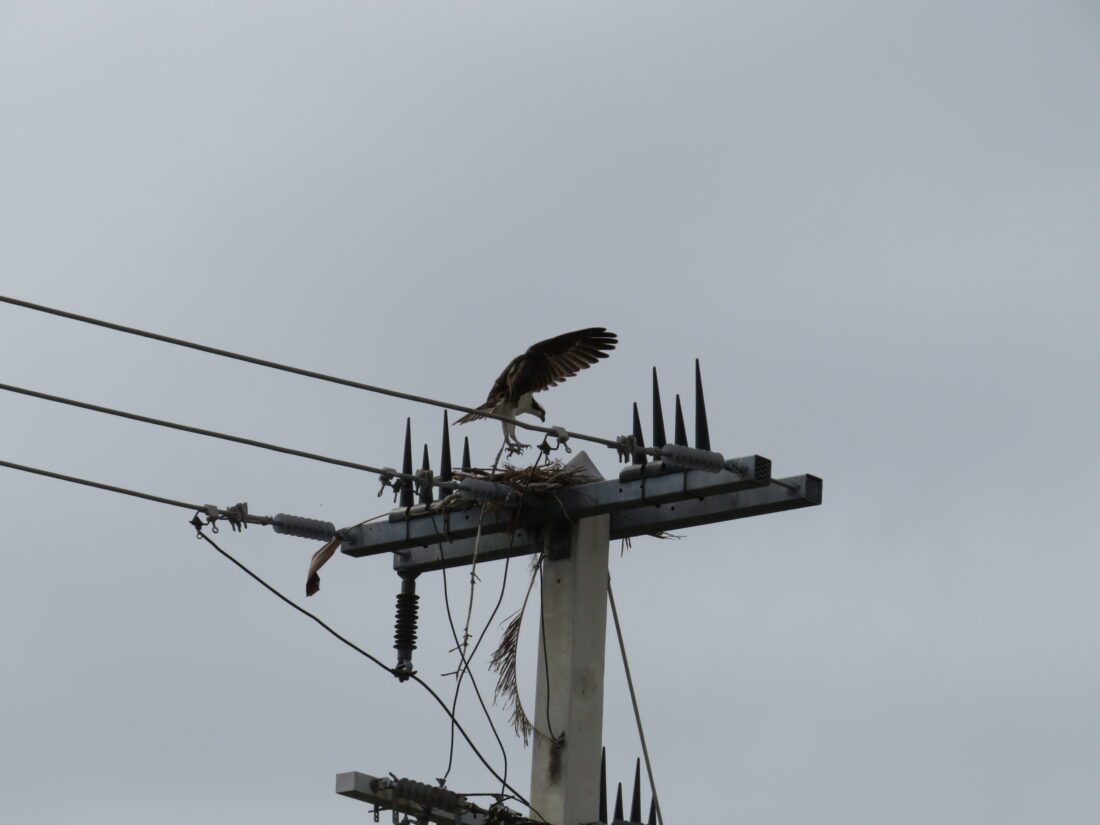
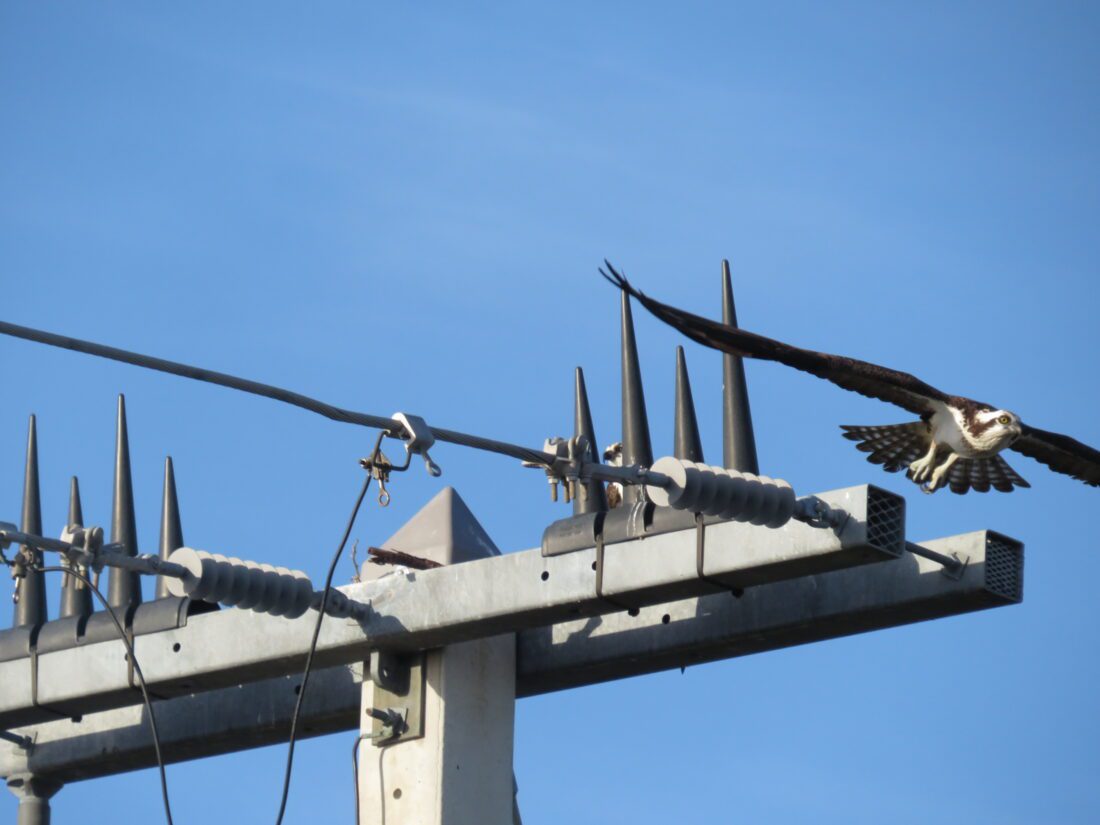
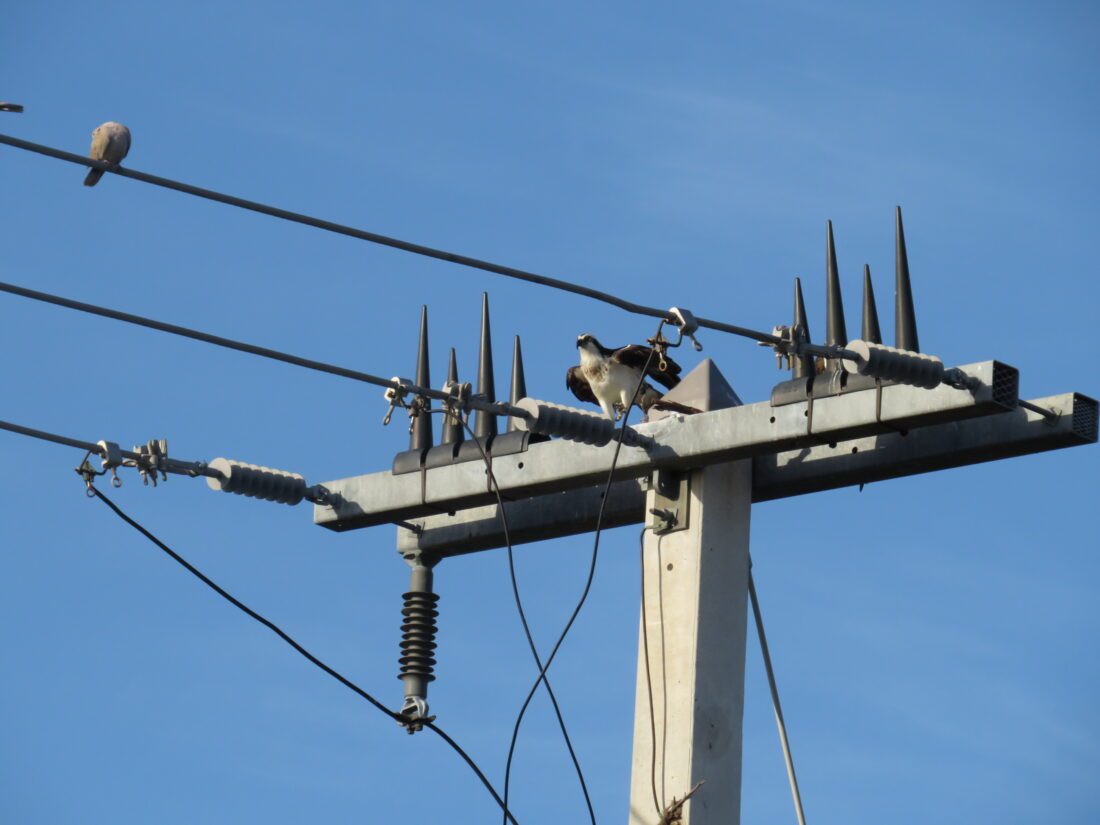
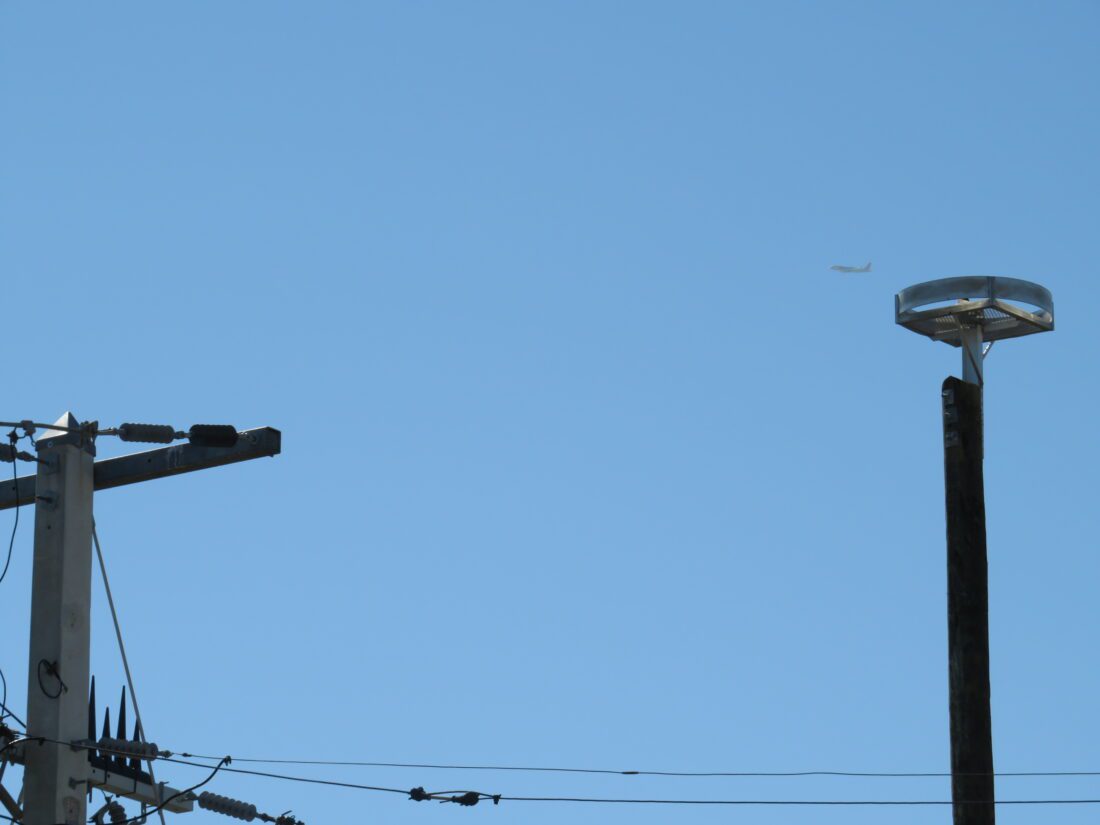
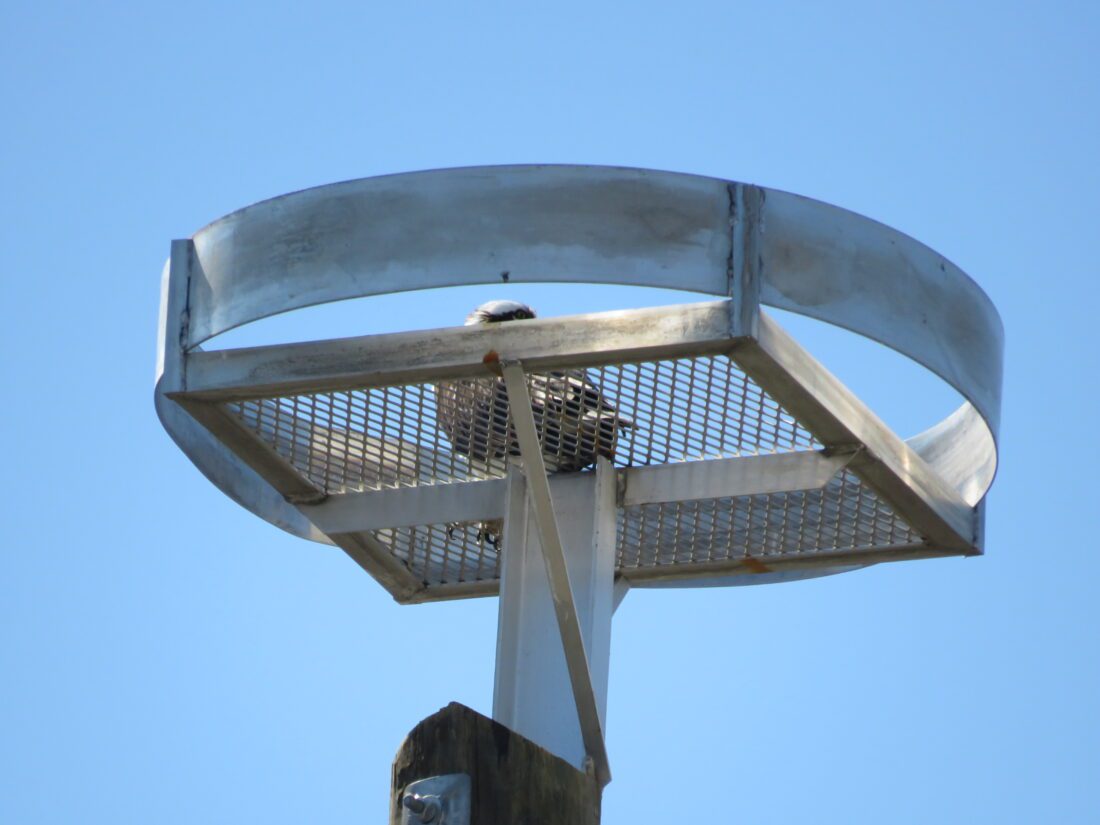
Last month, on Feb. 7 in the middle of a sunny afternoon, a loud crashing bang was heard on Main Street on San Carlos Island. The sound came from the direction of the assembly of power lines at the busy intersection in the area where a sign stating “Welcome to Fort Myers Beach” greets motorists before they head up the Matanzas Pass Bridge onto Estero Island.
A blown fuse or worse seemed possible but the power didn’t go out. A couple hours later, the power actually did go out and a Florida Power and Light vehicle was seen turning the power back on at the site of an electrical pole where a pair of osprey had been nesting.
The next day, an osprey nest which had been active for more than a month on top of the electrical pole, was gone. The pair of osprey who had been attending to the nest were also gone.
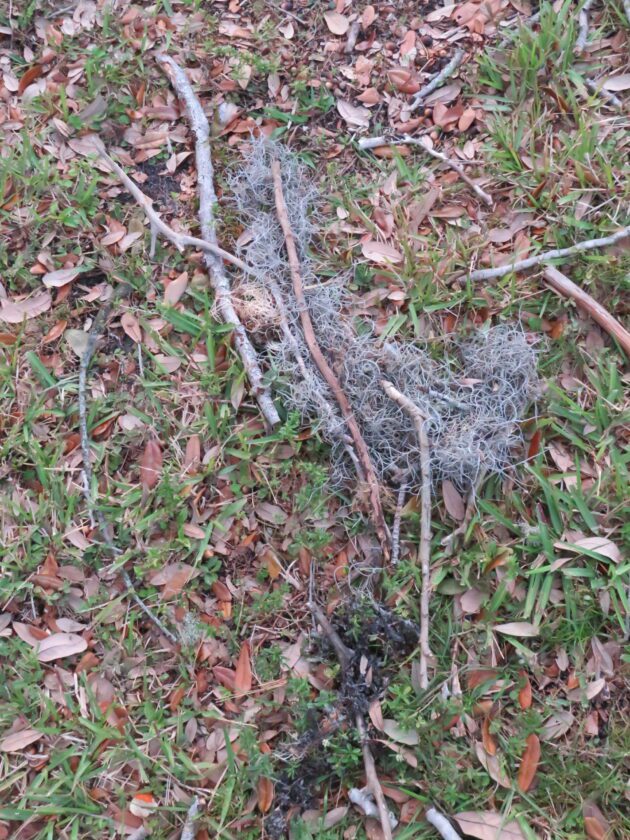
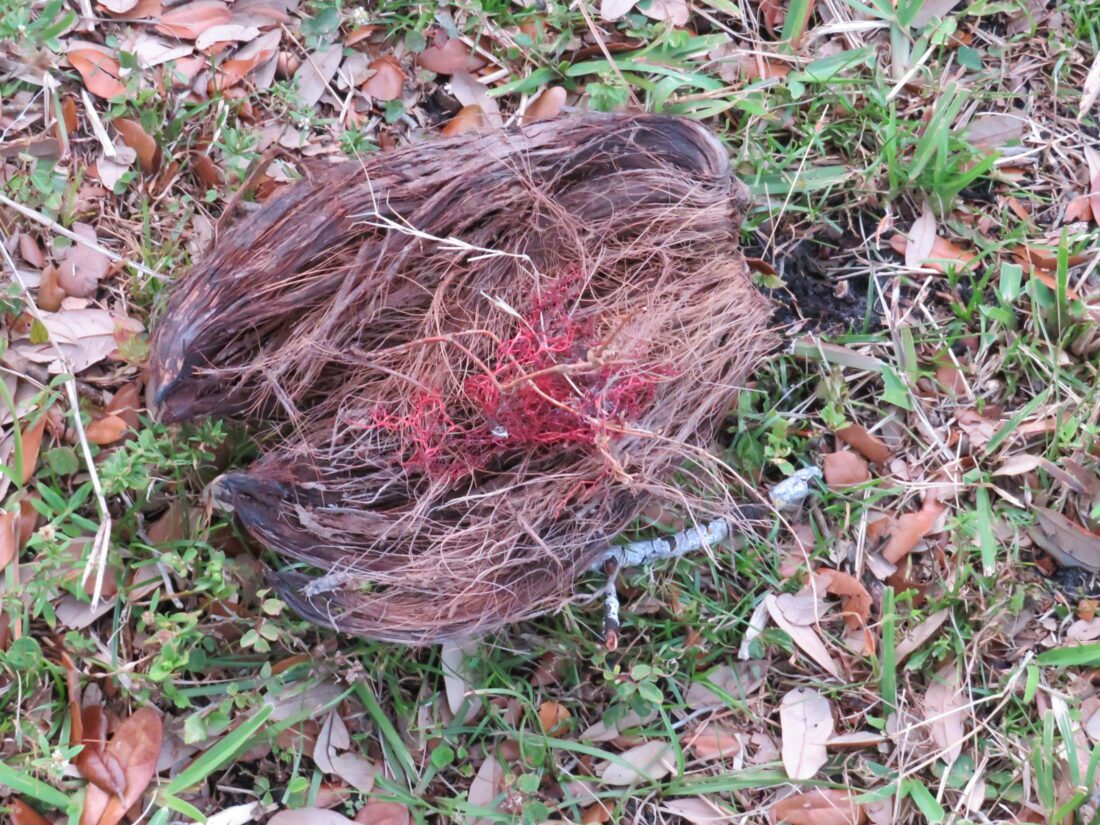
The remnants of the nest along with twigs were on the ground below.
The osprey couple had been regularly visible at the nest atop the electric pole since late December flying back and forth to the nest, building it, resting on it and calling out just as they had the year before.
Ospreys often mate for life and like to return to the same spots. This particular spot was a tight one.
Florida Power and Light (FPL) confirmed a brief power outage occurred at the site on Feb. 7. “FPL crews discovered an osprey beginning to build a nest on top of an FPL pole along San Carlos Boulevard. The sticks had the potential to fall into FPL equipment, likely harming the bird and potentially causing another power outage,” Florida Power and Light spokesperson Marshall Hastings said. “FPL follows an avian protocol depending on the nesting status of the osprey. In this case the bird had not completed its nest and was not nesting.”
In response, FPL set a new, taller, standalone pole with no energized facilities 30-feet from the existing pole for an osprey platform, “allowing the bird to safely build its nest,” Hastings stated in an email.
“The company has experienced high success using this approach to not only protect the energy grid but also provide a safe place for the birds to nest.”
“Ospreys have a high site fidelity and will return to the same area to nest. For this reason, it is often best to provide alternate nesting locations such as nesting platforms on standalone poles. The greatest challenge to service reliability occurs during nest building when sticks are dropped onto energized equipment. Relocating a nest to a nearby platform is an effective means of preventing nest building by providing an established nest location away from energized equipment,” Hastings stated.
Despite the efforts by FPL to erect a new platform to entice the osprey to nest there, questions remain.
How did the osprey nest get on the ground? What was the crashing noise?
“The initial outage was caused by crews de-energizing the grid so they could safely remove the in-progress nest. Nests pose a risk to the energy grid and the bird if they are to fall onto FPL equipment,” Hastings said.
“FPL crews are trained to look for signs of permanent nesting. In this instance, the crew looked at the nest to determine if there were any signs of life, like osprey eggs or baby osprey. Finding none, FPL crews removed the sticks and the in-progress nest to avoid further damage to the osprey or the energy grid and restored power to customers. If there are any signs of life in the nest, FPL crews de-energize the location and look for safe alternatives for the nest.”
In this case, because the bird had not completed the nest in their estimation, and a power outage had occurred, FPL believes the law allows them to take down the nest.
A permit from the Florida Fish and Wildlife Conservation Commission (FWC) is required for disturbing an active nest but not for an inactive nest. No permit was requested in this case.
An active nest is considered by the FWC to be when there are eggs or hatchlings.
There are exceptions to the law.
Exceptions:
No permit is required from the FWC to remove an active osprey nest in cases where there is an immediate danger to the public’s health or safety including but not limited to:
1) imminent or existing power outages that threaten public safety
2) in direct response to an official declaration of a state of emergency by the Governor of Florida or a local governmental entity
3) power restoration activities that involve non-routine removal or trimming of vegetation within linear right of way in accordance with a vegetation management plan that meets applicable federal and state standards.
The law give power companies leeway to remove an osprey nest due to a power outage or power restoration activity. In most other cases, a permit request is required.
According to the FWC, osprey mate from late November through March.
FWC believes nest fell on its own
The official position of the FWC is that the osprey nest in question fell on its own on Feb. 7, despite the statements of FPL’s own spokesperson that they took it down.
“After investigating the incident, it was determined the nest had fallen naturally, causing debris to fall on Florida Power and Light (FPL) equipment,” said FWC public information officer Adam Brown, of the Fort Myers field office. “This in turn caused a power failure at this site. Staff with FPL responded, legally removing the remaining nest debris and repairing the fuse and wiring that were damaged. No violations were found, and the incident has been closed.”
Though they are not endangered, ospreys are a protected bird species under State Rule Chapter 68A-4 and 68A-16, F.A.C. They are also protected under the Migratory Bird Treaty Act.
“Take of an active nest without a permit is a violation of state wildlife protections, except in cases where there is an immediate danger to the public’s health and/or safety,” Brown stated in a February email.
On Wednesday, Brown added that “it is important to note that whether the nest was manually removed by FPL or fell naturally, there would be no violation. An osprey nest that does not contain eggs or chicks can be intentionally removed without a permit.”
Brown said “it was reported that a power outage did occur, and therefore FPL would legally be able to remove the nest due to a threat to public safety.”
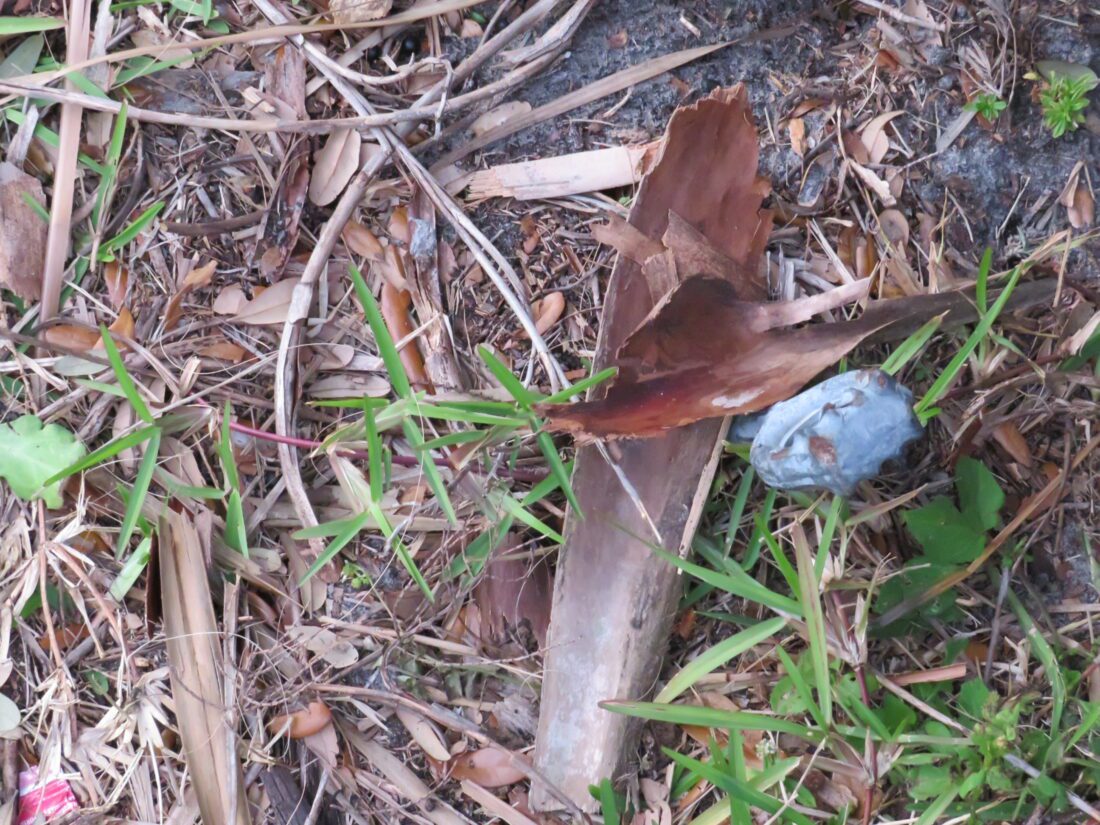
A report from the FWC investigating officer who responded to the site to investigate the removal of the nest two days later, stated that they noticed “minor debris from a nest at the base of the pole along with scrap pieces of power wire and fuses.”
The officer spoke to a representative from FPL, who “advised they had two (2) FPL tickets in the system for this location. The information on the tickets advised a power outage was caused by debris from an osprey nest on top of the power pole. Debris was removed and new wires and fuses were installed.”
Bryce Phillippi, FWC Southwest Region Public Information Officer, said “nesting on utility poles is common, and power companies must adhere to the appropriate minimization measures.”
Phillippi said it appeared FPL followed FWC rules and guidelines in removing the nest.
“Based on the information that we received, and what our officer was able to determine over the course of his investigation, FPL was in compliance with FWC rules and guidelines. An osprey nest that does not contain eggs or chicks can be intentionally removed without a permit,” Phillipi stated.
Those interfering with active nests if eggs were in the nest, could face fines and potentially prison time.
Monitoring ospreys:
The International Osprey Foundation monitors the populations of osprey.
President Kathryn Brintnall, who lives in Sanibel, said the organization is monitoring more than 135 nests in Fort Myers Beach and Sanibel, as well as recently branching out to Bonita Springs, Pine Island and Captiva this year. Their mission is to preserve, research and educate the bird species. They also write research grants and support internships to study and preserve osprey.
“We are a small nonprofit but international in scope,” she said. “We have members in 24 counties.”
The organization supports the building of platforms by FPL to give ospreys a safer place to nest other than electrical poles. Ospreys have taken a liking to the platforms, which can be found around Fort Myers Beach. The osprey also like to nest on top of trees.
As for whether the nest on Main Street and San Carlos Boulevard was an active nest, Brintnall believes the definition of an active nest is whether the female osprey is “continuously sitting on the nest.” If the nest is fully active, the female will sit on the nest 24/7 and switching off with the male when she flies away to catch something to eat or otherwise take a break.
Brintnall says she wishes FPL had reached out to her organization concerning the nest that was removed. One option would have been to move the nest to the nearby platform, rather than taking the nest down and putting up platform without the nest.
“Usually if you’re putting up a platform, you put up some sticks or material from the old nest,” she said.
She said she has tried to develop a closer relationship with FPL to no avail.
Jennifer Rusk, a member of the Marine Resources Task Force, is the Fort Myers Beach monitor for the International Osprey Foundation. Rusk said there were 22 osprey nests identified on Fort Myers Beach last year and three more were identified this year.
Rusk said the male osprey typically searches out the nesting material which is put together by the female. Female osprey incubate their eggs for an average of about 35 days, she said.
Rusk keeps an active watch on the osprey nets to keep notes on which ones are active and when they have hatchlings.
Brintnall said osprey have made a comeback in the area. After the red tide events of 2018 and 2019, the number of chicks born dropped drastically to just 26 on Fort Myers Beach and Sanibel. Usually, more than 100 are born each year on the two islands.
Brintnall said there was a case on Sanibel where a summons was issued to a person who removed an osprey nest from their chimney. The property owner’s neighbors got involved and eventually erected a platform nearby for the osprey.
In another case, the organization got involved to help remove a drone from an osprey nest after an osprey picked up the device.
Further guidelines from FWC regarding osprey nests:
Most work near osprey nests should be avoided
Ospreys are known to defend their nests aggressively and can pose a formidable threat to anyone close to their nests
No work should be attempted if chicks are younger than 1 to 2 weeks of age or they will die as a result.
Anybody who wishes to report the disturbance of an osprey nest should call the FWC at 888-404-FWCC (3922). The FWC also offers rewards to those who report wildlife violations.
The International Osprey Foundation has a website at www.ospreys.com.