

Restaurant with mobile trailers approved by Town of Fort Myers Beach Council
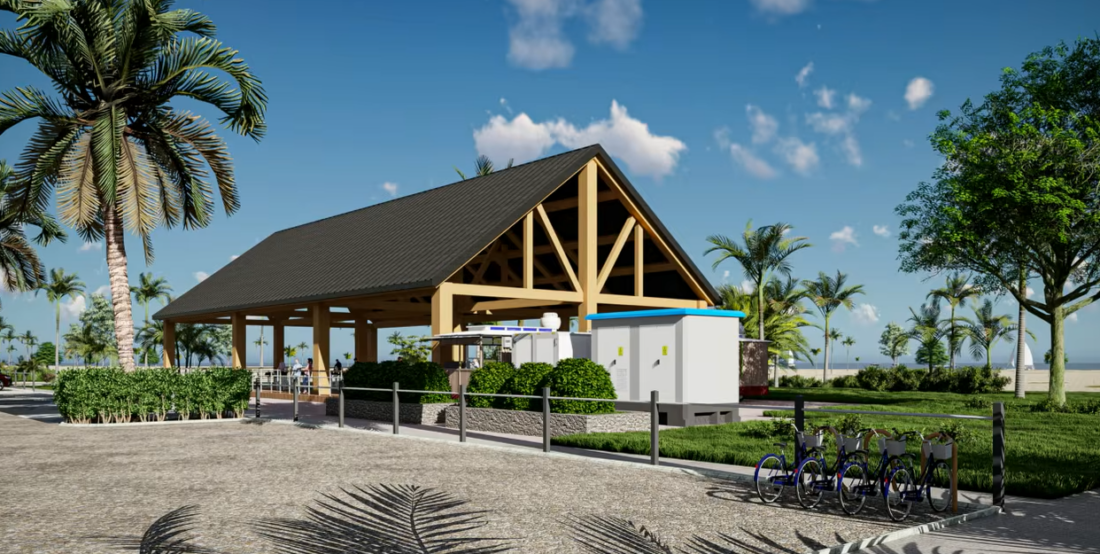
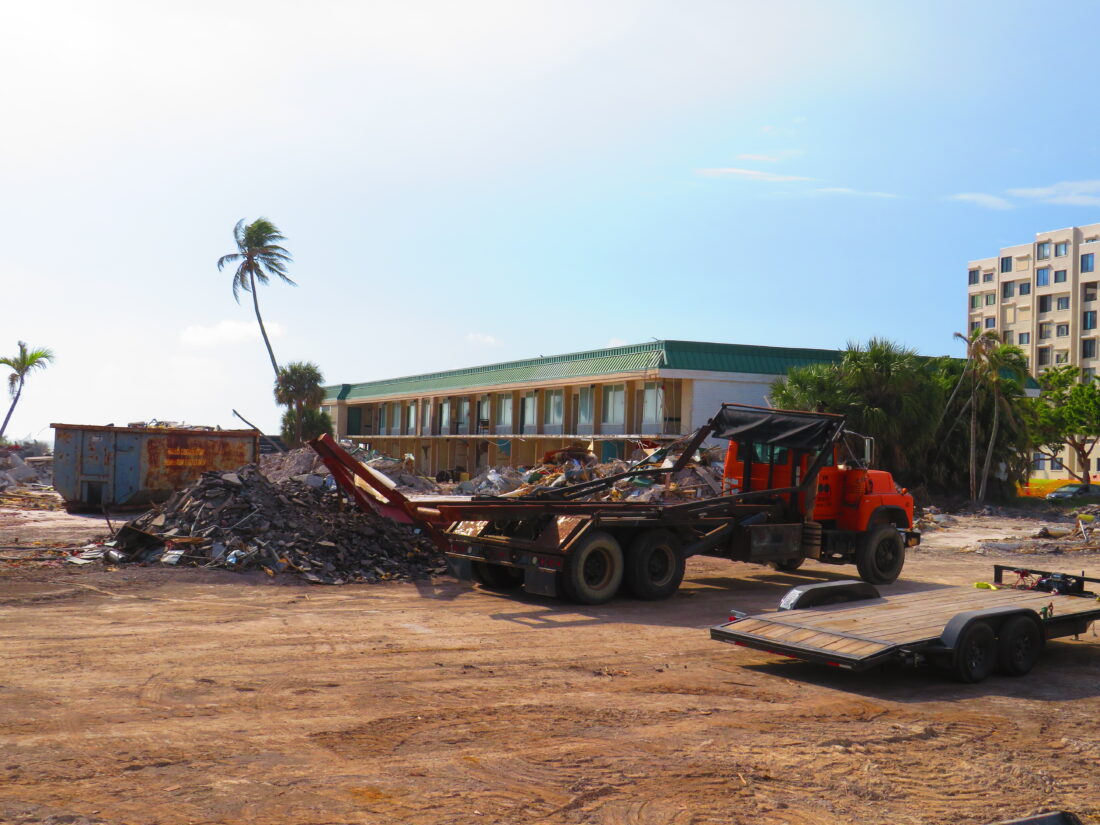
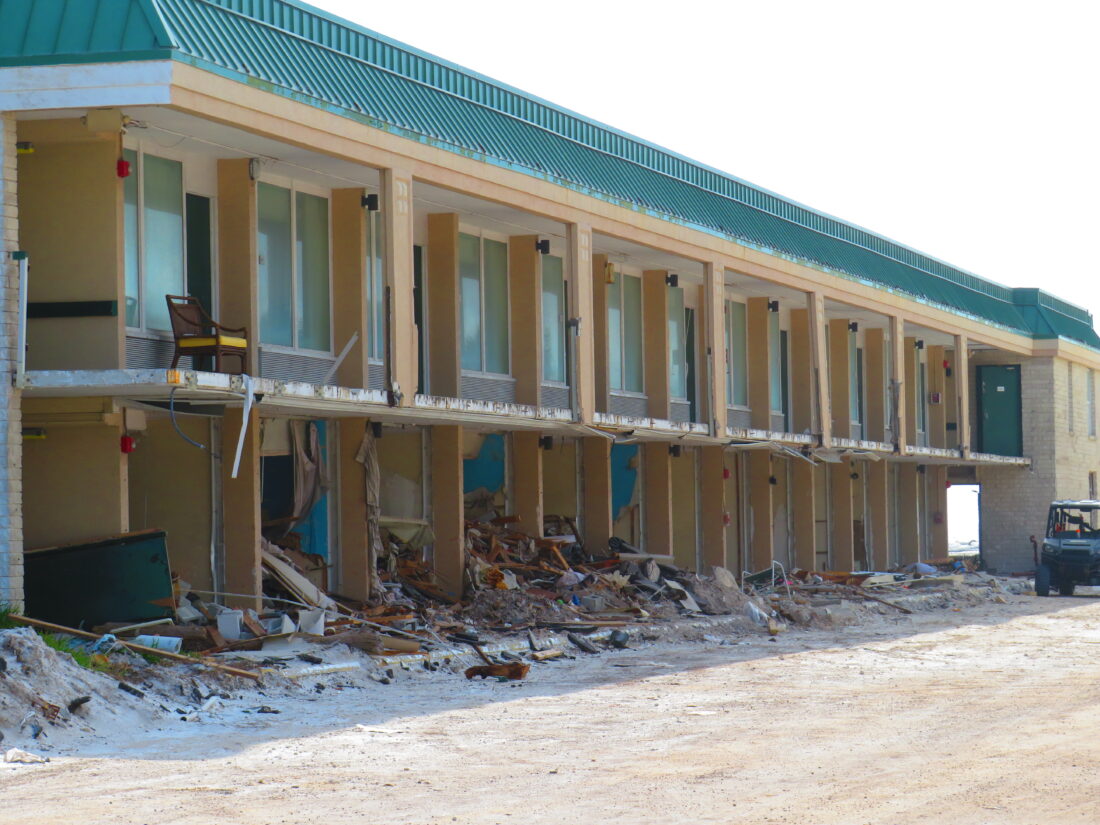
The owners of the former Wyndham Garden Inn property received unanimous approval from the Town of Fort Myers Beach Council for their plans for a restaurant operated out of mobile units on the property, as part of the first phase of their plans.
The approvals include seven deviations from town code for the two-phase development at 6890 Estero Boulevard, which is owned by FMBH LLC.
The first phase of the proposal is for a restaurant operating out of six mobile units, attorney Megan Strayhorn said. The restaurant would not be turned into a permanent structure until a wave mitigation wall was completed. Once a wave mitigation wall was installed, there would be a restaurant built in a pole barn, along with a tiki bar, with restrooms. There would also be a water recreation area, she said.
The mobile units will need to be removable within four hours of a hurricane watch, and towable by a light vehicle.
Strayhorn said the owners have agreed to install signage that notifies the public that all dogs must be on a leash, as part of the town code. There will also be signage stating that the area is surrounded by “critical wildlife area.” The property is adjacent to the Little Estero Island Critical Wildlife Area, where no dogs are allowed whether they are leashed or unleashed, though the signage stipulation provided by Strayhorn does not indicate as such.
The signage will also restrict parking to patrons only with terms subjecting violators to having their vehicles towed. In addition, there will be signage that states no overnight camping or parking is allowed.
The second phase of the project would also include a shared parking area. The shared parking area plans, which had some concerns from neighbors, would involved either an automated gate, a gate with an attendant, or would involve carts, Vanasse said.
The Fort Myers Beach Local Planning Agency recommended that the town require the applicants to have a parking attendant be present on-site during all operating hours.
Michael Close, president of the Creciente Condominium Association, which is located nearby, said he supports the project though he expressed some concerns about the potential increase in noise and to traffic. “This is going to cause an additional problem,” he said.
“This is a turnover parking lot. It isn’t like going into a hotel or house, where you are in and out once or twice a day. This is a turnover parking lot, which means it is going to be worse,” Close said.
Close said he is also concerned about the overflow parking lot attracting more traffic. Strayhorn said the “overflow” parking lot that Close was concerned about for the second phase of the project, was meant to accommodate parking from other nearby businesses and “ideally hotels” with a shortage parking, which would be able to use the site’s parking lot through valet parking.
There would be 74 parking spaces for the valet-only portion of the project in the second phase, and approximately 160 parking spaces in the first phase.
The shared parking allowance, is one of the main deviations from town code that the applicants were seeking.
Town code restricts joint use parking lots for unrelated businesses to within 750 feet of the property line. The deviation granted by the town council to the property owners, will allow the joint use parking area to be used for any business on the island with valet parking.
The council has approved projects over the last year, which do not have enough parking on site, such as the Beach Theatre down the road. Last year, council approved the overhaul of the property, allowing the owners to reduce the number of parking spaces required from 115 to 33.
Close said his biggest problem is the length of the agreement, for five years. “I think something along the line of two years would be reasonable.” Close also expressed dissatisfaction at the end of his remarks to being asked to wrap up his marks by Mayor Dan Allers, referring to the town’s three-minute limit on public speakers who are not the applicants for a project. “It always amazes me that applicants get more time than the public,” Close said.
Close said the second phase of the project was contingent on FEMA approving the wave mitigation wall. The wave mitigation wall had previously brought concerns raised by neighbors at the Sand Caper condominium association next door, and members of the Fort Myers Beach Local Planning Agency (LPA). Representatives of the Sand Caper, who attended the first hearing and LPA hearing, did not attend the second hearing to voice objections.
Daniel Dugan, President of Captain’s Bay South Condominium Association, said his association supported the project.
Dugan said he didn’t believe the project would increase traffic, referencing that the previous hotel and the Pincher’s Restaurant that was on site, did not cause a substantial increase in traffic.
Dugan said that if another hotel were to be built on the site, there could potentially be more traffic, but didn’t think the current plans would be much of an impact.
Johanna Farley, Vice President of the Island Pines Recreation Association and a member of the Estero Bayside Condominium Association, said she appreciated the “good neighbors” that the owners of the property have been. Farley noted that the owners have made their property the launching site for several sand renourishment projects.
“They have proven to be good neighbors throughout the whole time,” Farley said.